




NASA is making strides in the quest to bring back supersonic travel for passengers. In a recent blog post, the space agency revealed its "high-speed strategy" and its ongoing studies on the feasibility of commercial flights flying at speeds of up to Mach 4, which is over 3,000 miles per hour. The focus of these studies has been on transoceanic routes, including the North Atlantic and the Pacific, since supersonic flights overland are currently banned in many countries, including the US.
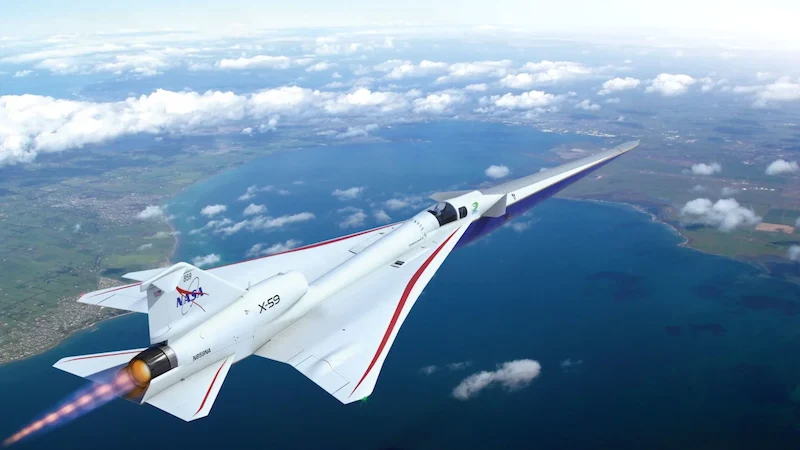
One of the key developments in NASA's efforts is the Quesst mission, which involves the development of "quiet" supersonic aircraft called X-59s. These futuristic planes have the potential to prompt a reconsideration of regulations, allowing them to travel at speeds ranging from Mach 2 to Mach 4 (1,535 - 3,045 miles per hour). This is a significant leap from Concorde's maximum speed of Mach 2.04 (1,354 miles per hour) and could potentially reduce the travel time between New York and London to just 90 minutes.
Following the completion of their studies, NASA's Advanced Air Vehicles Program (AAV) will now move into the next phase of research by contracting companies to develop aircraft designs and explore the possibilities, risks, challenges, and required technologies for sustained high-supersonic travel. Two teams, led by Boeing and Northrop Grumman Aeronautics Systems respectively, will be responsible for creating these designs.
Similar studies conducted a decade ago have shaped the development of the X-59 aircraft, and this new research aims to further analyze technology roadmaps and identify additional research needs for a broader high-speed range.
In addition to technological advancements, NASA recognizes the importance of considering safety, efficiency, economic factors, and societal impacts in the pursuit of supersonic travel. Mary Jo Long-Davis, the manager of NASA's Hypersonic Technology Project, emphasizes the importance of responsible innovation in this endeavor.
Lockheed Martin recently completed the construction of NASA's X-59 test aircraft, which aims to minimize sonic booms and pave the way for overland supersonic flights. Ground tests and a first test flight are scheduled for later this year, and NASA aims to provide enough data to US regulators by 2027.
With NASA's ongoing efforts and its collaboration with industry leaders, the dream of supersonic passenger flights may once again become a reality in the near future. However, realizing this vision will require addressing various challenges and ensuring that the benefits are balanced with responsible and sustainable practices.