


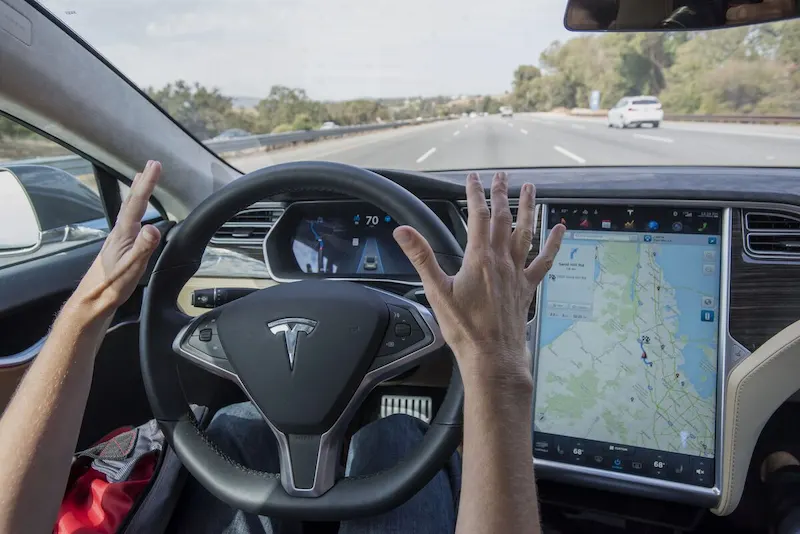


Tesla Inc. is facing its first trial in southern California where it will defend itself against allegations that its Autopilot driver-assistance technology played a role in a fatal crash. The trial, set to begin with opening arguments on September 28th in Riverside County, will be closely watched as it tests Elon Musk's assertion that Teslas are the safest cars on the road.
If the court finds Tesla responsible for the deaths, it could have serious implications for the company's ambition of developing fully self-driving cars. Tesla's push to lead the way in autonomy is a crucial part of its efforts to differentiate itself in the rapidly shifting global auto industry, as well as a significant factor in its soaring valuation of around $750 billion.
Tesla is already facing numerous legal battles and investigations from consumers, investors, regulators, and prosecutors over allegations of over-hyping its progress in achieving hands-free driving. The US National Highway Traffic Safety Administration is currently investigating whether Tesla's Autopilot system is defective and linked to at least 17 deaths since June 2021.
At the heart of these trials lies the question of whether the marketing of Autopilot has misled drivers into a false sense of security, leading them to believe their cars can drive themselves. Tesla, known for aggressively defending its technology, has previously won a trial this year when a jury dismissed a claim that Autopilot was responsible for a non-fatal crash.
Two upcoming trials are of particular interest. The first involves a 2019 crash where a Model 3 in Autopilot mode suddenly changed direction and veered off a freeway, resulting in a fatal collision with a tree. The family of the driver, as well as two passengers who were seriously injured, are seeking unspecified damages, including compensation for loss of life, physical injuries, and emotional distress. Tesla argues that the driver was under the influence of alcohol and that there is no evidence to suggest that Autopilot was at fault.
The second trial, scheduled to begin on October 6th in Palm Beach County, Florida, centers around a crash where a Model 3 collided with the underbelly of a tractor-trailer just 10 seconds after Autopilot was activated. Tesla maintains that the driver was over-reliant on the automation, ignoring the warnings that active driver supervision is necessary. The family of the deceased driver alleges that Tesla's marketing led drivers to place too much trust in the software.
Both trials are expected to last several weeks and may offer a deeper insight into the development of Autopilot as well as Elon Musk's involvement in refining the technology. The outcome of these cases, and the subsequent rulings on potential punitive damages, could have a significant impact on Tesla's future and its efforts to advance self-driving technology.