


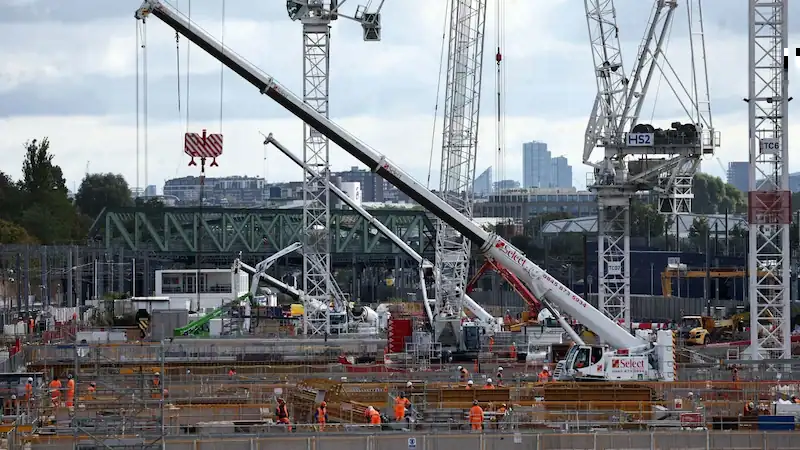


In 1825, the United Kingdom introduced the world's first passenger train, signaling the beginning of a railway revolution that would transform the country's economy. It brought about reduced travel times, enhanced trade routes, and connected major cities. However, fast forward to the present day, and the UK has just abandoned its 15-year plan for a high-speed railway network linking London with the north of England.
Prime Minister Rishi Sunak's decision to halt the High Speed Two (HS2) project due to escalating costs has highlighted a disturbing reality for the country. It appears that the UK can no longer afford to invest in large-scale projects like Germany, France, Italy, China, or Japan. This setback places the UK at a considerable disadvantage compared to other advanced economies, many of which benefit from the financial and environmental advantages of high-speed rail.
As someone with a personal connection to the railway industry, I can't help but feel a sense of sadness over the cancellation of the Birmingham-to-Manchester high-speed line, especially considering the historical significance of my great-great-grandfather's involvement in the development of steam trains. Although Sunak claims that £36 billion ($43.7 billion) in savings will be redirected to new transport projects in different regions of the UK, it will take years for these alternatives to materialize.
While the government may argue that their new plan will stimulate growth and opportunities in the north, it is difficult to imagine that a faster train to London would not have brought significant benefits to the region. Henrietta Bailey, CEO of Greater Birmingham Chambers of Commerce, highlighted the interconnected nature of the projects mentioned by Sunak, many of which were dependent on the delivery of HS2.
Sunak's decision has not only united business leaders, labor unions, and political allies against him, but it has also raised concerns about the loss of credibility with investors. The High Speed Rail Group, representing major companies such as Siemens, Hitachi, and Bombardier, described this move as the biggest and most damaging U-turn in the history of UK infrastructure. They pointed out that every other major European country has recognized the importance of high-speed rail in building a modern society and economy, and they hoped that Britain could follow suit.
This decision is disheartening for British manufacturers who would have benefited from income generated by the HS2 project and future business opportunities. Stephen Phipson, Chief Executive of Make UK, expressed his disappointment and emphasized the negative message it sends about the UK's commitment to completing major infrastructure projects.
Mark Allen, Chief Executive of property group Landsec, suggested that the issue goes beyond the specific economic benefits of HS2. It raises questions about the country's ability, or lack thereof, to successfully deliver major infrastructure projects. Sunak, who has worked diligently to restore the UK's credibility following previous setbacks, now finds himself facing reality. After massive government spending to support businesses and households during the pandemic and energy crisis, the UK's treasury is depleted.
The country's debt has surged by 40% since the pandemic began, surpassing 100% of national income for the first time since the 1960s. Furthermore, a significant portion of this debt is linked to inflation, resulting in higher repayments. The UK currently spends more on servicing its debt as a percentage of government revenue than any other developed economy, and borrowing costs are increasing once again. These challenges have put the UK's public finances in a precarious situation.
With public services in urgent need of funding and an upcoming election, Sunak made the difficult decision to cut billions in costs, sacrificing a crucial infrastructure project. The nation can only hope that this policy reversal does not discourage investors further and exacerbate the struggles of the UK economy, perpetuating a cycle of weak growth and underinvestment.
Unfortunately, business leaders are not optimistic. James Mason, CEO of the chamber of commerce for West and North Yorkshire, lamented the cancellation of promises that would have delivered transformative infrastructure upgrades. Instead, the country is left with an outdated Victorian rail network that simply cannot cope with future demand in the decades to come.