


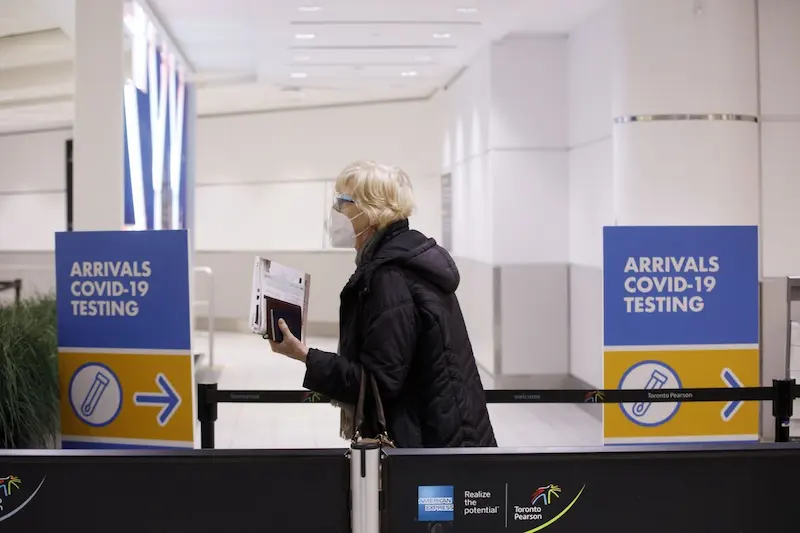


In a scathing report, Canada’s auditor general has criticized the rushed development and poor oversight of a border customs app called ArriveCan by Prime Minister Justin Trudeau’s government. The app, initially intended to collect contact and health information from travelers to aid in quarantine measures, was later expanded to include processing customs and immigration forms for those entering Canada. However, the development of the app quickly became a headache for Trudeau's Liberals, facing criticism from the opposition Conservatives over malfunctions and potential privacy concerns.
The auditor general's report, published on Monday, highlighted the lack of proper documentation, financial records, and controls surrounding the development of the app. Due to the poor record-keeping, the exact cost of the project could not be accurately determined. The Canada Border Services Agency outsourced the development of ArriveCan due to a lack of in-house resources, which ultimately led to ballooning costs of at least C$59.5 million ($44.2 million), according to Auditor General Karen Hogan.
Hogan noted that the border agency's "disregard for policies, controls, and transparency in the contracting process restricted opportunities for competition and undermined value for money." The report found that there was limited documentation explaining why the contract was awarded to a company called GC Strategies. In fact, it was discovered that the same company had helped in developing some of the requirements for the contract, raising concerns about conflicts of interest.
Furthermore, the auditor general's report highlighted potential ethical issues surrounding the project. Some border agency workers involved in ArriveCan were reportedly invited by vendors to dinners and other activities, but there was no evidence that these invitations were reported to their supervisors, as required by the agency's code of conduct. This failure to disclose these invitations, coupled with existing relationships between vendors and agency employees, created a "significant risk or perception of a conflict of interest," according to Hogan.
As a result of these findings, the Canada Border Services Agency has launched an investigation into the conduct of certain employees and contractors. The Royal Canadian Mounted Police (RCMP) is also investigating allegations of misconduct with links to the contract. The auditor general's office did not pursue further audit work around ethics to avoid compromising these ongoing investigations.
The report also highlighted issues with the testing and performance of the ArriveCan app. Between April 2020 and October 2022, the Canada Border Services Agency released 177 versions of the app with inadequate documentation of testing. In one update in June 2022, approximately 10,000 travelers were wrongly instructed to quarantine, pointing to serious flaws in the app's functionality.
Consequently, the report concludes with eight recommendations aimed at improving documentation, financial controls, and ethics in outsourcing projects. It calls for measures to prevent potential bidders from being involved in any part of the request for proposal process. The auditor general emphasized the need for tighter controls and transparency to ensure better value for money and avoid conflicts of interest.
The auditor general's scathing report sheds light on the mismanagement, lack of transparency, and potential ethical breaches surrounding the development of the ArriveCan app. The findings raise concerns about the government's handling of the project and its accountability in ensuring effective and secure technology solutions for border control during the pandemic.