


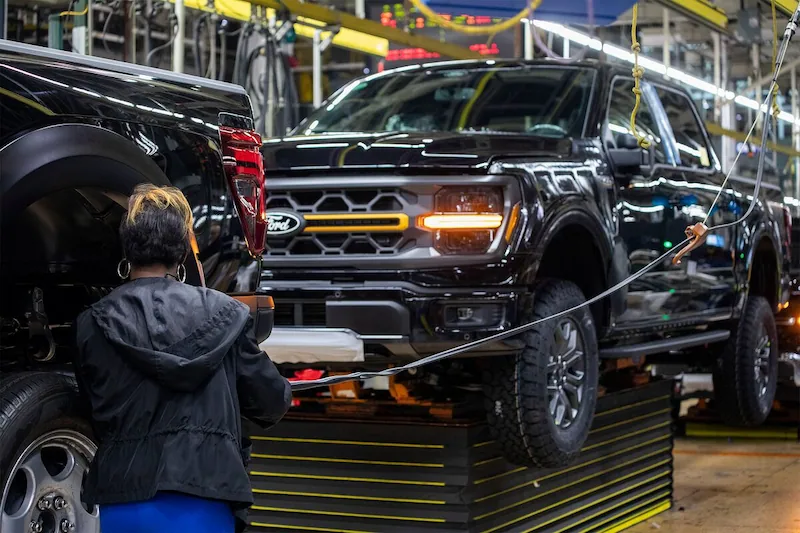


In a bold move to address Ford Motor Co.'s longstanding issues with recalls and quality control, CEO Jim Farley has implemented a new strategy that prioritizes thorough checks and fixes before releasing newly redesigned models to the market. This approach, dubbed the "build-and-hold" method, involves holding vehicles for up to six weeks for additional quality inspections beyond the usual factory tests.
Farley's decision stems from Ford's staggering $4.8 billion annual expenditure on warranty repairs, a figure that has more than doubled in the past five years. By holding back models like the redesigned F-150 and Explorer for extra scrutiny, Ford aims to reduce the need for costly recalls and enhance overall customer satisfaction.
While this approach may temporarily impact revenue due to delayed deliveries to dealerships, Farley is confident that the long-term benefits will outweigh the initial financial setbacks. By preemptively addressing potential issues, Ford hopes to emulate industry leaders like Toyota in terms of quality and reliability.
Despite improvements in quality metrics for 2024 models, Ford still trails behind its competitors in independent studies. Farley, who spent a significant portion of his career at Toyota, acknowledges the need for a "fundamental reset" in Ford's quality assurance processes. To incentivize better performance, the company has tied executive bonuses to meeting quality targets.
The decision to prioritize quality over speed to market has already yielded positive results. By identifying and rectifying defects before vehicles reach dealerships, Ford has managed to sidestep numerous potential recalls. Dealer feedback has been positive, with many acknowledging the benefits of receiving fully vetted vehicles that require minimal post-delivery repairs.
While the build-and-hold strategy may not be a permanent fix, it represents a step in the right direction for Ford as it seeks to shed its reputation as the most recalled automaker in the US. As the company continues to refine its quality control processes and address issues at the design stage, the hope is to eventually compete on par with industry leaders and deliver a superior ownership experience to customers. Farley's commitment to prioritizing quality over short-term gains signals a shift towards a more sustainable and customer-focused approach in the ever-evolving automotive landscape.