


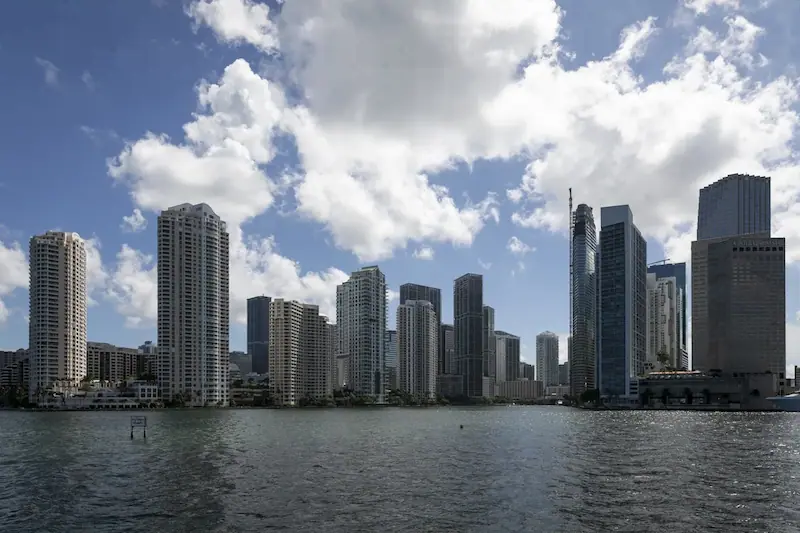


In a recent report by UBS Group AG, major US cities such as Miami and Boston are highlighted as facing high or increasing risks of real estate bubbles forming. Miami, in particular, has seen prices surge by nearly 50% since the end of 2019, largely driven by a booming luxury market. This surge has led to the risk of a bubble in Miami being classified as "high" for this year, placing it at the top of the list of global cities at risk.
Following Miami, Tokyo and Zurich rank as the second and third cities most likely to experience a real estate bubble, according to the report's criteria, which defines a bubble as a significant and sustained mispricing of an asset that is only evident when it bursts. Despite the overall global bubble risk decreasing for the second consecutive year, certain cities are still facing significant challenges in their real estate markets.
The report also notes that residential markets are expected to gain momentum in the coming quarters, with prices projected to rise as increasing rents in urban centers drive demand. Factors such as constrained supply, as both buyers and sellers wait for more favorable interest rates, have kept markets tight and limited transaction volumes.
In the US, house prices have been on the rise, with supply constraints further exacerbated by the wait-and-see approach adopted by many participants in the market. This has led to a freeze in market activity as players hold out for better conditions, contributing to the tightening of supply.
Conversely, European markets have experienced significant price declines, particularly in cities like Frankfurt, Munich, Stockholm, and Paris, where rising mortgage rates have triggered market corrections. These cities, which previously exhibited high risks of real estate bubbles, have now seen some of the most substantial price corrections since the onset of the pandemic.
Overall, the report underscores the dynamic nature of real estate markets and the key role that economic outlook plays in shaping future price trends. As building permits decline across most cities and financing conditions worsen, coupled with a significant increase in real rents over the past two years, the affordability of living space for skilled service sector workers has become more challenging. The current landscape suggests a delicate balancing act between supply, demand, and economic conditions that will shape the trajectory of real estate markets in the near future.