


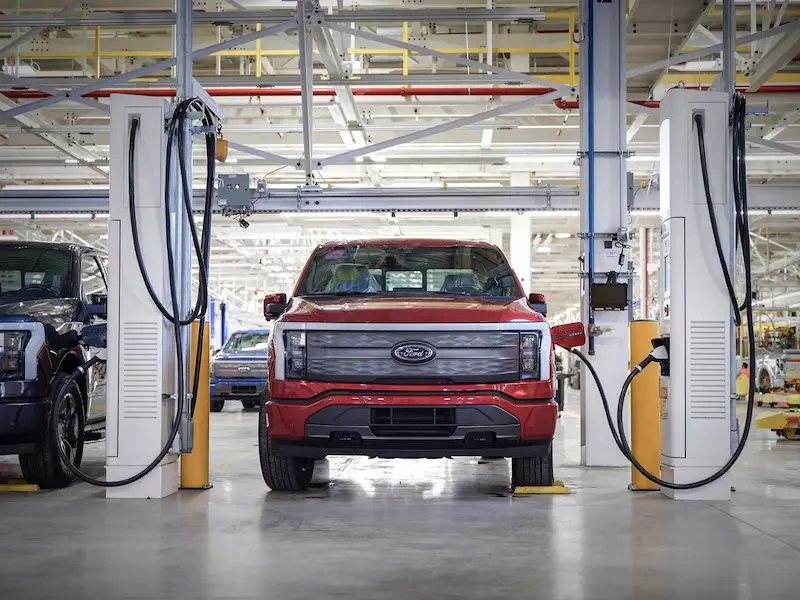


It’s not hard to see why the Cybertruck, with its sharp angles and sci-fi bravado, didn’t spark a nationwide buying frenzy. Rivian’s sleek R1T hasn’t fared much better—its $800-plus monthly payment puts it firmly out of reach for the average driver. Even the old guard, Ford and GM, who together move hundreds of thousands of pickups each year, have barely made a dent convincing traditional truck buyers to ditch gas for a battery.
In the first half of 2025, roughly 35,000 electric pickups found homes in American driveways—a small number, and actually 4% fewer than last year. Gasoline trucks? They sold 1.6 million over the same stretch, according to AutoForecast Solutions. The gap is massive, and it’s left automakers wondering if they misread their most loyal customers entirely.
Still, no one’s walking away just yet. Ford’s betting on a smaller, cheaper electric pickup—about $30,000—set to roll off the line in Kentucky in 2027. The lower sticker price might draw more eyes, but for some buyers, cost isn’t the only sticking point. Jim Weber, who runs Ohio Mulch Co., tested a Ford Lightning last winter. Fully loaded and running through Kentucky’s hills, the truck didn’t come close to its 320-mile rated range. His crews are on the road from 8 a.m. to 8 p.m. during busy season. “There’s just no way electric trucks have the capacity,” he says.
That’s the heart of the problem. Many truck owners haul, tow, and push their vehicles hard. If the battery drains fast under load, the truck becomes more of a risk than a tool. And for others, it’s about something less tangible: the sound, the rumble, the ritual of a V-8 on a cold morning.
Five years ago, the mood was different. Tesla’s stock was flying, Rivian had just gone public, and both were teasing electric pickups that could threaten Detroit’s bread and butter. Ford and GM jumped in fast. The reservation numbers looked like gold—Tesla bragged about a million Cybertruck deposits, Ford claimed over 200,000 for the Lightning. But those deposits didn’t all turn into buyers, and production ramped up on a wave of optimism that didn’t match reality.
The truth is, only about 1% of full-size truck shoppers even considered an EV as a second choice, Strategic Vision found. For most, the math didn’t work. GM’s base electric Silverado costs $55,000 and runs 286 miles on a charge; the cheapest gas Silverado is around $37,000 and can cover 450 miles. Add in the politics—two-thirds of big-truck buyers lean right, and surveys show Republicans are far less interested in EVs—and the sales challenge grows even steeper.
In places like Fort Worth, Texas, dealers move maybe three or four electric Hummers or Sierras a month. “Buying an EV is a political statement,” says local dealer Randy Hiley. GM has already dialed back its EV-only plant plans, opting to mix gas and electric production in 2027 to keep the lines moving and avoid tariffs.
The pivot brings a small sigh of relief to workers who’ve watched plants sit idle. “We want to be versatile,” says David Michaels of UAW Local 5960. “I believe in EVs, but we need to keep building what people are actually buying.”
For now, electric pickups aren’t dead—but the road to making them mainstream looks a lot longer, and a lot rougher, than Detroit first thought.