


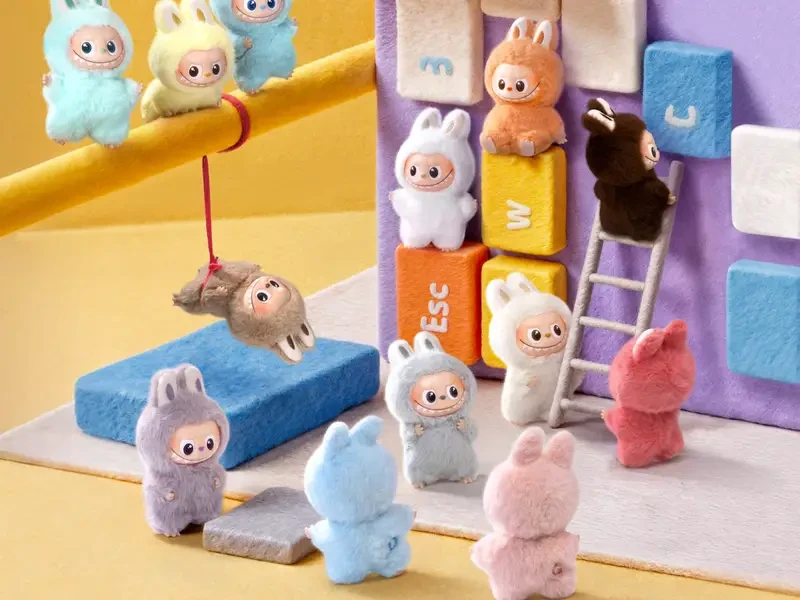


Pop Mart International Group Ltd., the Chinese toy maker that has turned small vinyl figurines into a global sensation, once again saw its shelves wiped clean within minutes. On Thursday night, the company’s newest line of Labubu dolls — the rabbit-eared characters with their trademark mischievous grin — went on sale online in China. By the time many shoppers refreshed their screens, the stock was already gone.
The launch happened at 10 p.m. local time across several platforms, including Pop Mart’s WeChat mini-program and its official Tmall storefront. According to posts from disappointed fans on social media, some buyers didn’t even make it to the checkout page before every doll was marked as sold out. Those who missed out were told they would still have a chance on Friday, when the dolls would arrive in Pop Mart’s physical stores.
This overwhelming response at home is a strong signal for the company’s upcoming international rollouts. The Labubu series is scheduled to land in the United States, Thailand and Australia through online sales starting Friday morning, where it will test whether the same fever gripping Chinese consumers can be replicated abroad. For investors, the immediate sell-out provides reassurance that the craze is far from cooling.
Among those who managed to secure a set was Xiaolei Wang, a 26-year-old programmer in Beijing who has also carved out a lucrative side business reselling Pop Mart toys. He snagged one case of 14 mini Labubus online but couldn’t add a second before the system crashed. “I’ll sell them as a bundle,” he admitted matter-of-factly, noting that he rarely keeps any for his personal collection. Over the past year, Wang claims he has earned more than $7,000 flipping Labubus and other Pop Mart figurines.
The dolls themselves aren’t large — only about 10.5 centimeters high — but their price and rarity fuel demand. Each blind box costs 79 yuan (about $11) in China, and there’s a slim one-in-168 chance of pulling a rare edition. This lottery-style thrill is part of what hooks collectors. Alongside the minis, Pop Mart also introduced a larger premium doll priced at 499 yuan and a Labubu pendant, targeting fans who want something more substantial.
The momentum has been translating into real numbers for the company. Earlier this month, Pop Mart reported stronger-than-expected earnings, powered largely by Labubu sales. The market reacted instantly: the company’s shares hit record highs, pushing its market value to nearly $56 billion. Its founder, Wang Ning, has now entered the ranks of China’s youngest billionaires. The surge has drawn comparisons to the Beanie Baby mania in the United States during the 1990s — when plush animals became speculative assets before the bubble burst.
Unlike Beanie Babies, however, Pop Mart insists its growth is being carefully managed. CEO Wang Ning recently explained that production is intentionally limited, since the dolls are partly handmade and cannot be rushed. That scarcity keeps collectors on edge. Even before Thursday’s official launch, some resellers on Alibaba’s Xianyu platform were offering presales of entire cases at more than twice the retail price. One seller listed a 14-box set for 2,600 yuan, compared with the 1,106 yuan official cost. Wang, the programmer, said he expects to sell his own set for around 1,700 yuan, which would net him a quick 600 yuan profit.
The secondary market is now so active that counterfeit Labubus have begun to surface. China’s customs authority announced recently that hundreds of fake dolls had been seized in raids, underscoring just how valuable these little toys have become.
When the Labubu minis arrive in Western markets, they will carry a premium price tag. In the U.S., Pop Mart’s website lists them at $22.99 each — roughly double what Chinese buyers pay. The company is betting that the higher price won’t deter overseas fans, especially as the dolls have already been spotted in the hands of celebrities from BlackPink’s Lisa to David Beckham. Each appearance on social media only fuels the frenzy further.
For now, what remains clear is that Pop Mart has tapped into something far bigger than a toy fad. The mixture of blind-box anticipation, limited production, and savvy cultural marketing has created a storm of demand. Whether it eventually fizzles out like the Beanie Babies, or evolves into a sustained global phenomenon, depends on how long the magic of Labubu can hold.