


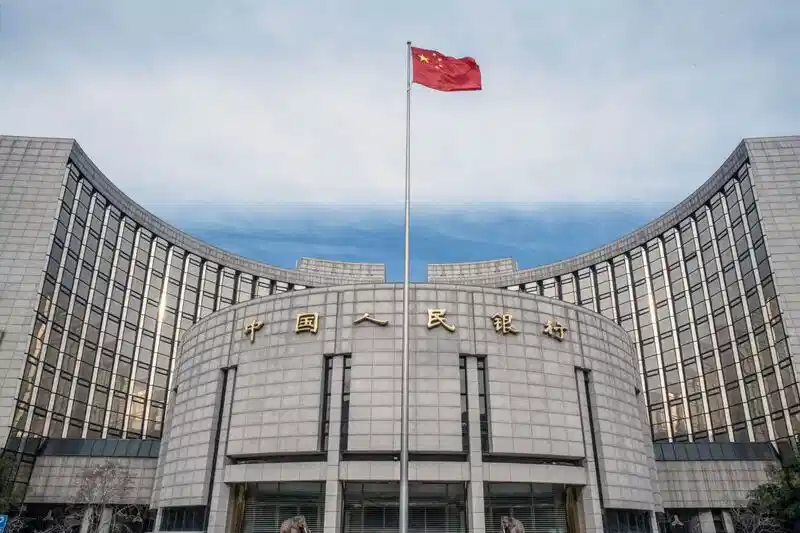


Over the course of a generation, China has become the largest sovereign lender to developing economies, following a pattern of business expansion and influence-building similar to the 20th-century spread of US economic power. Now, with an increasing number of poor nations facing debt issues, China is using its vast central bank reserves to establish itself as a source of emergency funds to help out some of the same countries it had previously lent to. In a recent study, economists have found that Beijing has provided at least $240 billion in aid to 22 countries, including Pakistan, Argentina, and Nigeria, since 2000. This has created a new system for cross-border rescue lending to countries in debt distress, which is challenging the US-led frameworks established since the 1940s. China has become an influential lender of last resort, especially during the COVID-19 pandemic, deploying more than three-quarters of the money, or $185 billion, from 2016 to 2021. This figure surpassed the $144 billion disbursed by the International Monetary Fund over the same period, although the IMF did issue $650 billion in a special pandemic increase in quotas in August 2021 that countries could draw on to boost reserves. This trend is also fueling competition between the US and China.
The majority of the aid provided by China was made available through PBOC foreign-currency swap lines, which are essentially low-interest-rate loans between central banks. Over the last twenty years, the PBOC has negotiated swap agreements worth about $580 billion with 40 countries and trade blocs to encourage the international use of China's currency, the renminbi, for trade and commercial purposes. The study found that at least $170 billion has been drawn down on those credit lines by 22 countries, while the remaining $70 billion has come through loans to governments from Chinese state-owned banks and companies. The increase in lending through the PBOC is related to President Xi Jinping's "Belt and Road" initiative, a soft-power push that has funded $900 billion in infrastructure and other projects worldwide. Critics argue that this initiative has contributed to debt difficulties in countries like Sri Lanka and Pakistan and has left Chinese state-owned lenders with much of the debt.
Currency swap agreements have become a common feature of crisis responses since the 2007-08 global financial crisis. During the economic turmoil of the Covid-19 pandemic in May 2020, major central banks drew down almost $450 billion from US Federal Reserve swap lines, according to the Bank of International Settlements. Recently, the Fed and four other central banks also relied on existing swap lines to keep dollars flowing in the financial system amid the fallout from the collapse of Silicon Valley Bank, with the short-term loans typically repaid within days.
A new study published on March 27 suggests that China's currency swap agreements with developing countries have a different purpose than those of other major central banks. According to the study, these countries are using the lines to strengthen their central banks' foreign reserves during times of crisis and to support their government budgets, rather than for liquidity support. This effectively turns the PBOC into a lender of last resort, a role traditionally played by the IMF. The study, which was conducted by economists from the World Bank, AidData, Harvard University, and Germany's Kiel Institute for the World Economy, highlights the growing importance of debt in the US-China rivalry, as the two nations jostle over the best way to restructure the debt of developing countries that have defaulted on their loans. The IMF has warned that at least three dozen of the world's poorest countries are currently in debt distress or at high risk of it.
According to a study published on March 27, China's currency swap agreements differ from others as developing countries are using the lines for purposes other than shoring up liquidity, such as increasing foreign reserves and helping fund government budgets. This makes China's central bank a source of emergency funds, usually the role of the IMF. Critics argue that this approach is kicking the can down the road and may lead to prolonged periods of debt difficulties for borrowing countries. The study found a correlation between the drawing down of PBOC swap lines and indebtedness to China. While China usually gives borrowers more time to pay off loans instead of forgiving debt, there are signs of China becoming more careful in managing access to swap lines. In Sri Lanka, for instance, a $1.4 billion PBOC swap line has been frozen until the country has accumulated enough international reserves.