


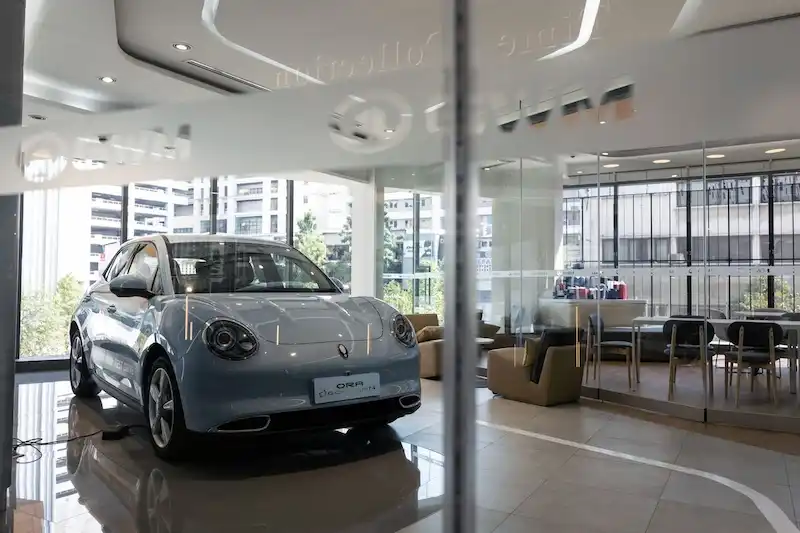


Thailand, often referred to as the Detroit of Asia due to its thriving auto industry, is determined to stay ahead in the rapidly growing electric vehicle (EV) sector. The country has already attracted significant investments in the EV industry, primarily from Chinese companies such as BYD, Great Wall Motor, and SAIC Motor. Changan Auto and GAC Aion New Energy Automobile are also finalizing their investment plans, while Chery Automobile is in talks.
To encourage more investment, Thailand offers tax incentives for companies investing at least 5 billion baht in EV manufacturing, including exemptions from the 20% corporate tax rate for three to eight years. Additionally, key EV parts production can enjoy a 50% tax discount for an additional five years. The government is also keen on developing a domestic EV market and provides subsidies of up to 150,000 baht to drivers who switch from gasoline-powered cars.
However, the next crucial step is to attract battery manufacturers, amid tough competition from the US and Europe, which have implemented programs to build domestic battery industries. In response, Thailand is working on a multibillion-baht subsidy package for battery manufacturers, seeking approval from the new government. The country has set a target for 30% of its car production to be clean vehicles by 2030, which would require an annual domestic production of 40 gigawatt hours of batteries.
Thailand's attractiveness as an EV hub lies in its strategic location near large Asian markets like China and India. The country boasts a robust automotive supply chain with over 2,000 parts and component suppliers. Moreover, Thailand has proven its resilience during the COVID-19 pandemic as there were no lockdowns that impacted the industrial sector.
The Thailand Board of Investment, responsible for attracting foreign investment, aims to establish the country as a leading player in the EV industry. Their comprehensive approach includes incentives for EV producers as well as the entire EV ecosystem, including batteries, key parts, charging and swapping stations, and software applications. The goal is to promote all segments of the industry, encompassing various types of electric vehicles from cars to motorcycles and bikes.
As part of their updated incentives, Thailand plans to reduce the subsidy amount while increasing conditions such as battery specifications to keep up with evolving technology. The subsidy for EVs will be reduced from 150,000 to 100,000 baht per vehicle, with a minimum battery capacity requirement of 50 kWh. The objective is to make EVs more affordable and competitive with traditional internal combustion engine cars.
Thailand is particularly interested in attracting battery manufacturers such as BYD and CATL to take advantage of the battery subsidy package. Under their 30@30 target, the country aims to secure at least 40 gigawatt hours of batteries.
Thailand's appeal to Chinese investors can be attributed to its ability to navigate geopolitical tensions and decarbonization challenges. With its strengths and responsiveness to investor needs, Thailand has emerged as a sought-after investment destination in Southeast Asia, especially in the EV and component parts sector. The Thai authorities have made multiple trips to China this year to foster closer ties and attract investments from Chinese companies.