


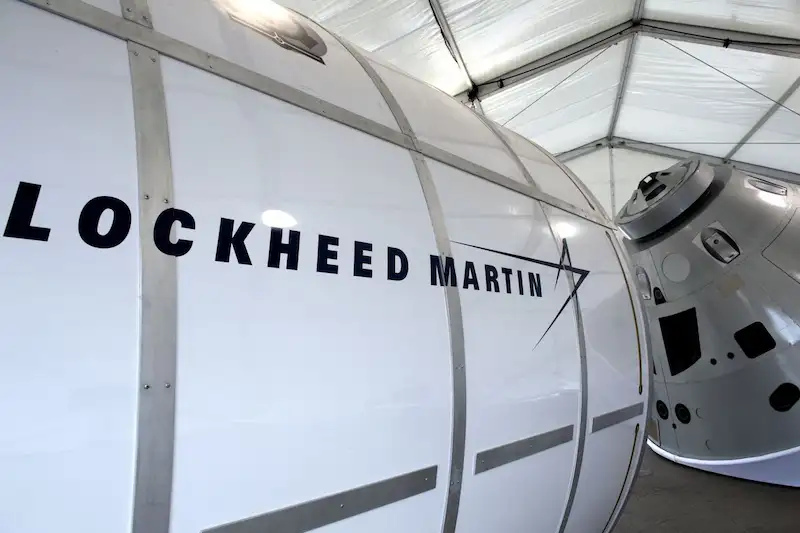


Lockheed Martin Corp., in partnership with the US Department of Defense's research and development organization, Darpa, has been selected to design and develop a groundbreaking nuclear thermal rocket engine. The engine will be tested in space as part of the DRACO program. With a contract worth billions of dollars, Lockheed Martin will also be responsible for building an experimental spacecraft called X-NTRV, which will be equipped with the nuclear engine. The ambitious goal is to launch the spacecraft in 2027.
The development of a nuclear thermal propulsion system has long been regarded as a potential game-changer for crewed missions to Mars and beyond. Unlike traditional chemically powered rocket engines, nuclear propulsion systems can provide high thrust with greater efficiency and simplicity. These engines work by transferring heat from a reactor to hydrogen propellant, causing it to expand and generate thrust as it exits the rocket's nozzle.
While Lockheed Martin will focus on the engine design, Virginia-based BWX Technologies will be responsible for building the nuclear fission reactor that powers the engine. The Department of Energy will also contribute by providing high-assay low-enriched uranium fuel for the reactor. The use of such advanced technologies requires careful consideration, as operational failures could result in the release of radioactive material. However, Lockheed Martin assures that the reactor will only be activated once the spacecraft has reached a nuclear safe orbit, ensuring the safety of the system.
It is worth noting that this is not the first attempt at developing nuclear thermal propulsion. NASA conducted a similar program, NERVA, in the 1960s and 70s, but the technology never made it into space. The collaboration between NASA, DARPA, and Lockheed Martin under the DRACO program aims to finally demonstrate the capabilities of nuclear thermal propulsion through an in-space test.
NASA has committed $300 million to the DRACO initiative, while the US Space Force will provide the launch vehicle and launch pad for the X-NTRV vehicle. This significant investment reflects the growing interest and belief in the potential of nuclear propulsion for future space exploration missions. If successful, nuclear thermal propulsion could significantly shorten crewed missions to Mars and beyond, opening up new possibilities for human space exploration.