


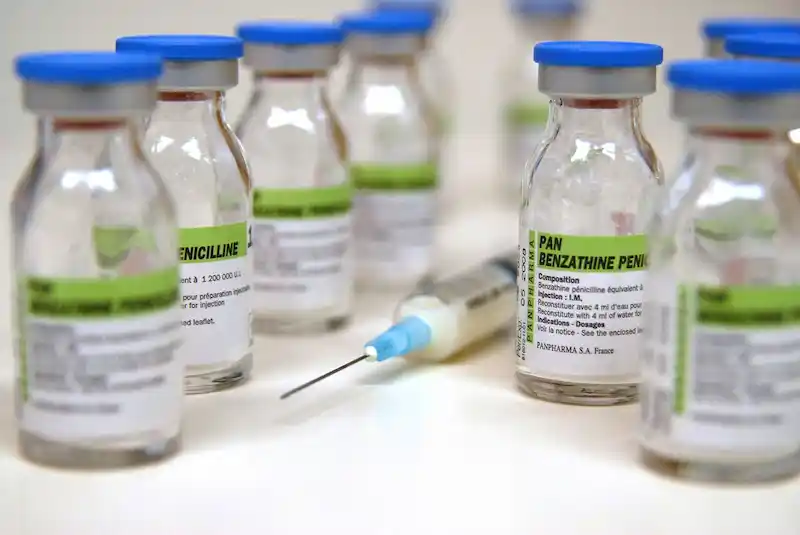


A severe shortage of penicillin to treat the rising number of syphilis cases in the United States has reached a critical point, causing US health officials to consider declaring a public health emergency. Medical centers across the country are rationing the recommended treatment for syphilis due to a supply crunch. The scarcity of penicillin G benzathine, the preferred drug for treating syphilis, has led healthcare providers to prioritize its administration to pregnant patients and babies, as the drug can pass through the placenta and treat the fetus as well.
While syphilis cases have been steadily increasing over the past few years, the recent surge in infections has raised significant concerns among federal health authorities. To address this issue, the Department of Health and Human Services (HHS) is mobilizing a new federal task force dedicated to tackling the problem. Officials are discussing the possibility of declaring a public health emergency to access additional funding and resources to address the crisis.
The current shortage of penicillin poses a significant challenge for healthcare providers. Joseph Cherabie, an assistant professor at Washington University, highlights the remarkable scarcity of the drug. As a result, individuals with syphilis are receiving substandard or alternative treatments, compromising their care and potentially exacerbating the spread of the infection.
Leading the government's response is Assistant Secretary for Health Admiral Rachel Levine. Levine has been working to recruit experts from various agencies, including the HHS, the Centers for Disease Control and Prevention (CDC), and the Food and Drug Administration (FDA), to address the syphilis crisis. The FDA, in particular, has been brought in to address ongoing drug shortages.
Admiral Levine and CDC officials are carefully considering the benefits and potential drawbacks of declaring a public health emergency. While such a declaration would provide the HHS with increased flexibility and funding, there are concerns that the public may view it as an overreaction given the pandemic fatigue. Ultimately, HHS Secretary Xavier Becerra has the authority to make the declaration.
The shortage of penicillin can be attributed to a combination of factors. Increased syphilis cases and a shortage of a common antibiotic used to treat strep throat, which led to the increased prescription of penicillin as an alternative, have strained the supply chain. Pfizer Inc., the sole manufacturer of penicillin G benzathine in the US, has indicated to the FDA that disruptions in supply will likely continue until the second quarter of 2024. The company has ramped up production by adding night and weekend shifts but has deprioritized the production of a less commonly used dose to allocate more resources.
Syphilis poses a particular risk to pregnant individuals, as it can be transmitted to the fetus, resulting in pregnancy loss, stillbirth, or severe disabilities. The number of congenital syphilis cases, where the infection is passed from mother to baby, is also at its highest rates since the 1990s. Penicillin G benzathine is the recommended treatment for pregnant individuals, but due to the shortage, healthcare providers are being advised to use an alternative antibiotic, doxycycline. However, doxycycline requires twice-daily pill administration for at least two weeks, which may pose challenges for patient adherence. Additionally, there is less evidence supporting the effectiveness of doxycycline compared to penicillin.
Various states and health systems are implementing strategies to address the shortage. Some are directing doctors to use doxycycline for non-pregnant individuals with syphilis. Michigan, for example, has instructed its state-funded clinics to use doxycycline for certain patients due to the shortage. At Houston Methodist, a health system in Texas, penicillin G benzathine is reserved solely for pregnant patients and babies with syphilis.
The rise in syphilis cases is part of a broader trend of increasing sexually transmitted diseases (STDs) in recent years. While rates of HIV have been declining, the prevalence of other STDs such as syphilis, chlamydia, and gonorrhea has been on the rise. Contributing factors include decreasing condom use and a lack of resources dedicated to STD prevention due to reduced funding and diverted attention during the COVID-19 pandemic.
The shortage of penicillin for syphilis treatment underscores the urgent need to address the growing crisis. Public health officials are working diligently to develop strategies to mitigate the impact of the shortage and prevent further spread of the infection.