


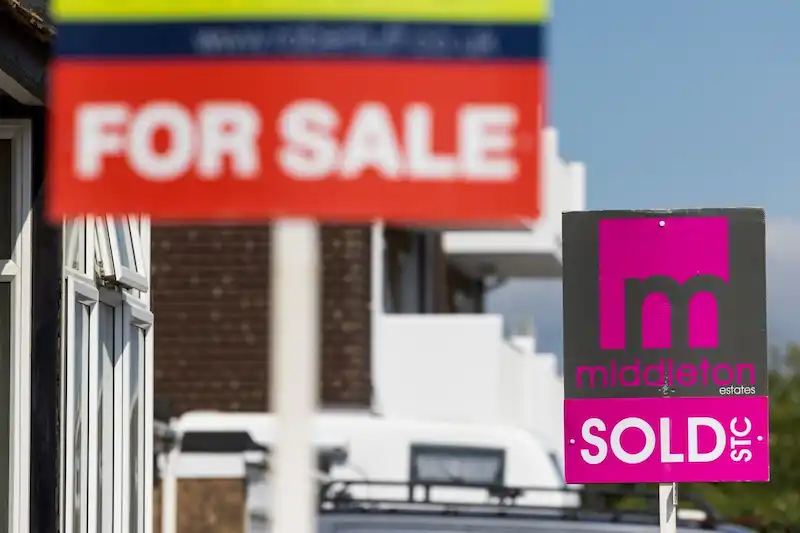


The housing market in the UK is experiencing a deepening slump, as soaring borrowing costs and the looming threat of further rate hikes have deterred potential buyers. Nationwide Building Society, one of the largest mortgage lenders in the country, reported a 3.8% year-on-year drop in house prices, which is the steepest decline since 2009 and faster than the 3.5% decrease recorded in the previous month. This comes as a surprise to economists who were expecting a slightly larger decline of 4%.
The recent data reflects the impact of the 13 interest rate increases implemented by the Bank of England since the end of 2021, which have put a strain on consumers' ability to afford higher property prices. This has led to the market experiencing its deepest slump since the global financial crisis over a decade ago.
Nationwide's Chief Economist, Robert Gardner, acknowledged the stretched affordability for those looking to buy a home with a mortgage. However, he also expressed optimism that a relatively soft landing is still achievable.
Despite the recent slump, the housing market has managed to avoid the collapse that appeared possible last autumn when borrowing costs hit 14-year highs following an ill-fated budget announcement by former Prime Minister Liz Truss. In fact, in November, Nationwide had even warned of a potential 30% decline in prices in a worst-case scenario.
Based on Nationwide's data, house values have fallen by about 4.5% since their peak in August and now average £260,828. In July, prices saw a slight decline of 0.2% following a 0.1% gain in the previous month. Overall, the average value of a home has only decreased by approximately 0.5% so far this year.
Nationwide predicts further modest falls in prices for the remainder of the year, with their current forecast suggesting a peak-to-trough fall of around 6.5%. However, economists, including those at Bloomberg Economics, anticipate that the combined pressures of higher mortgage rates and a cost-of-living squeeze will continue to weigh heavily on property prices. Bloomberg Economics expects a peak-to-trough decline of around 10%, implying a further 5.5% decrease.
The housing market downturn is also evident in the number of completed housing transactions, which stood at 86,000 in June. This is 15% below last year's levels and approximately 10% below pre-pandemic figures. Housebuilders have responded to the dwindling demand by scaling back on projects in anticipation of fewer buyers.
The UK's housing sector woes have had repercussions on related industries as well. Travis Perkins Plc, a building supplies company, reported lower revenues and a 31% drop in adjusted operating profit due to "significant weakness" in the housing sector. The company cited a notable reduction in housing transactions as interest rates continued to climb.
The uncertainty surrounding the housing market has made it difficult for potential homebuyers, leading to a continued decline in prices both on a monthly and annual basis. Experts and industry professionals predict further falls in house prices throughout the rest of 2023.
The Bank of England's actions to curb inflation, which reached a four-decade high late last year, include interest rate hikes. Economists are anticipating another quarter-point increase this week, bringing rates to 5.25%, which would be the highest since 2008. Traders, on the other hand, are pricing in a 40% chance of a half-point rise this week, with rates potentially approaching 6% by February.
Nationwide estimates that an individual earning an average wage and seeking a typical first-time buyer property with a 20% deposit would see monthly mortgage payments account for 43% of their take-home pay at a 6% mortgage rate, up from 32% a year ago.
Despite the subdued activity expected in the near future, Nationwide's Gardner believes that healthy rates of nominal income growth, together with modestly lower house prices, should improve housing affordability over time, particularly if mortgage rates moderate after the peak of the Bank Rate.