


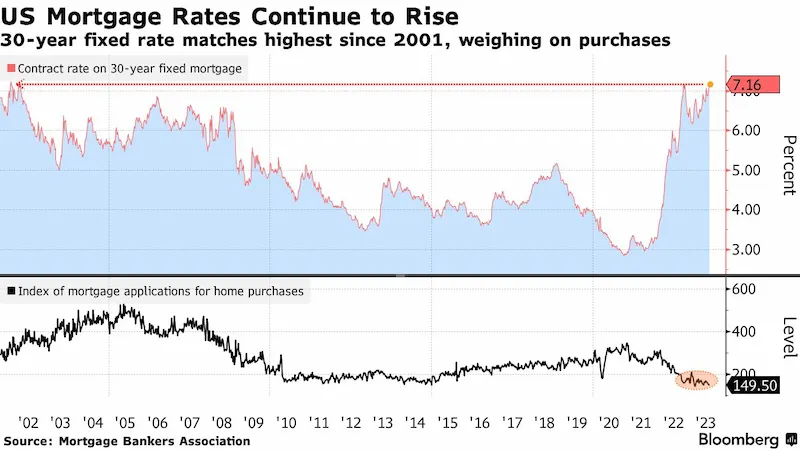


The mortgage rates in the United States have climbed to 7.16%, matching the highest level seen since 2001. This increase has had a negative impact on both sales and refinancing activity in the housing market. According to data from the Mortgage Bankers Association, the contract rate on a 30-year fixed mortgage rose by 7 basis points to reach 7.16% in the week ending August 11. Additionally, the gauge of home-purchase applications has dropped for five consecutive weeks, reaching the second-lowest level since 1995.
These rising borrowing costs present a new challenge for the housing market, which had been showing signs of recovery. High mortgage rates dampen demand and deter homeowners with lower interest rates from listing their homes for sale. Furthermore, the lack of homes available for sale is driving up prices. Recent price gains have helped the housing market recover the approximately $3 trillion lost in value during the past year's slowdown, as stated by Redfin Corp. With prices increasing and rates rising, affordability is becoming a major concern.
The impact of higher rates could worsen inventory issues as homeowners looking to move face the prospect of giving up their lower mortgage rates. According to Redfin, about nine in ten mortgage owners have interest rates below 6%. It is worth noting that last year, the Federal Reserve's efforts to control inflation through higher interest rates had a detrimental effect on the housing market, dragging down economic growth. While existing-home sales have remained sluggish due to limited supply, new-home sales have rebounded, partially thanks to more inventory becoming available.
The recovering housing market has brought about more optimism among economists, as it suggests that the US might be able to avoid recession. In fact, recent data showed an increase in new-home building and a rise in applications to build single-family homes. However, there are concerns about higher borrowing costs, as indicated by the drop in homebuilder sentiment for the first time this year. Builders may need to offer more incentives in order to attract potential buyers, despite the general encouragement for more home construction due to the low inventory.
According to Mortgage News Daily, the 30-year rate stood at 7.26% on Tuesday. The Mortgage Bankers Association also reported a decline in refinancing applications for the fourth consecutive week, with an overall decrease of 0.8% in mortgage applications.
These figures, gathered from mortgage bankers, commercial banks, and thrifts, cover over 75% of all retail residential mortgage applications in the US. The data highlight the challenges faced by the housing market due to rising mortgage rates, which are impacting both demand and affordability.