


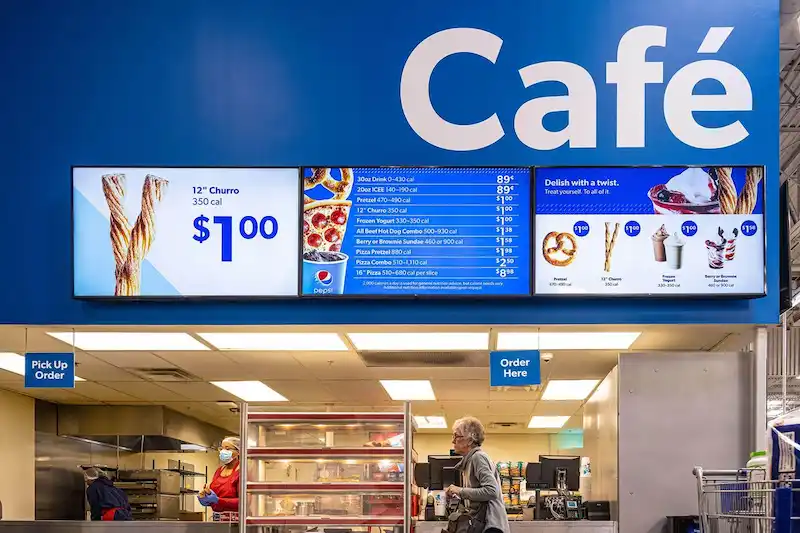


Sam's Club, the membership warehouse chain owned by Walmart, has recently undergone a significant transformation in its strategy to compete with its biggest rival, Costco. Led by CEO Kath McLay, the company is shifting its focus from catering primarily to small and midsize businesses to targeting more upscale shoppers. This move includes streamlining its product assortment and investing in higher-quality goods, mirroring Costco's approach. By appealing to households with an average income over $100,000, Sam's Club is aiming to increase its customer base and drive growth.
The efforts seem to be paying off, as Sam's Club has seen positive results in recent quarters. It has outpaced Costco in sales growth at stores open for at least a year, suggesting market share gains. This turnaround has caught the attention of analysts, who have raised their price target on Walmart as a result.
The pandemic has played a role in the success of warehouse clubs like Sam's Club and Costco. With consumers seeking value and limited assortments, these retailers have been less vulnerable to online competition. Sam's Club also capitalized on the convenience factor, rolling out curbside pickup to meet the needs of customers who preferred quick and easy shopping experiences.
Technology has been another area of focus for Sam's Club. Its Scan & Go feature allows shoppers to use the company's app to make purchases in-store without waiting in long checkout lines. While Sam's Club has adopted this technology, Costco has yet to offer a comparable service, giving Sam's Club a potential advantage.
In addition to convenience and technology, Sam's Club has revamped its merchandise selection. The company conducted extensive research, listening to feedback from customers and streamlining its offerings. It reduced grocery items by 15% and increased its focus on quality with its own brand, Member's Mark, similar to Costco's Kirkland Signature. Sam's Club has invested more to improve the quality of products and has eliminated items that didn't meet its standards.
Although Sam's Club has gained ground in terms of sales growth, it has trailed behind Costco in profitability. A reduction in consumer demand for discretionary products during the pandemic led to a decline in operating income. However, McLay is confident that the company will bounce back and restore its operating margin to normal levels.
As Sam's Club expands its footprint by opening new locations, the competition with Costco is likely to intensify. While the two companies don't overlap in all markets, they will increasingly go head-to-head as Sam's Club adds about 30 new stores in the coming years. Costco has also been steadily expanding, and smaller competitor BJ's Wholesale Club is pushing into Sam's Club strongholds.
McLay believes that Walmart is well-equipped to compete, emphasizing the importance of price positioning and the willingness of consumers to cross-shop at different warehouse clubs. Sam's Club's recent success and its efforts to become more like Costco indicate a promising future for the company in the highly competitive retail landscape.