




A London-based fintech owner is facing serious allegations of aiding notorious drug traffickers in their attempt to launder hundreds of millions of euros through a crypto exchange platform. Caio Marchesani, a 38-year-old Italian, is accused by Belgian authorities of knowingly participating in the hoarding of cash and converting it into bitcoin for Sergio Roberto De Carvalho, an internationally sought-after drug lord, and Flor Bressers, a Belgian national known for violent crimes. Marchesani, who owns the regulated payments business Trans-Fast Remittance, was arrested at Heathrow Airport in May and is now facing extradition to Belgium.
This case has brought renewed scrutiny to the British fintech scene amid concerns that weak controls are enabling the movement of illicit funds globally. A study by Transparency International UK revealed that more than a third of UK-licensed electronic-money institutions exhibit red flags. In response, the Financial Conduct Authority (FCA) stated that it is engaging with Trans-Fast and conducting ongoing supervisory work in light of these allegations.
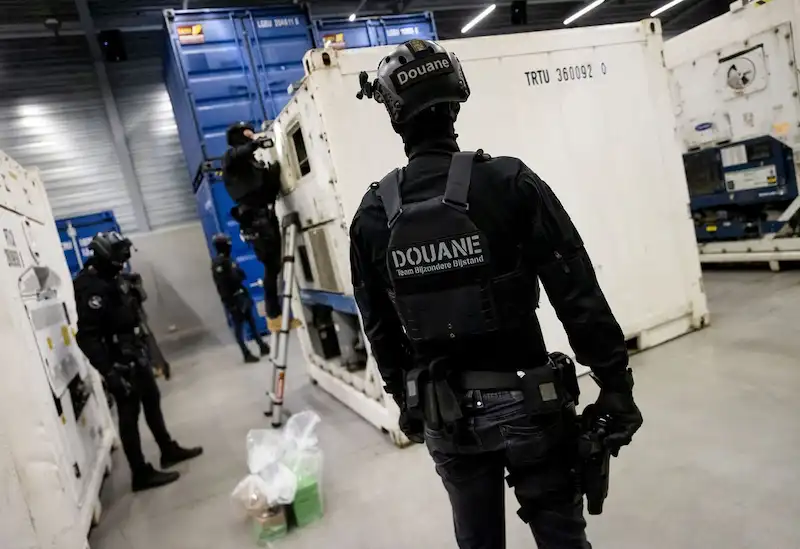
The investigation against Marchesani began three years ago after Dutch customs officials seized over 12 tonnes of cocaine worth over €260 million ($283 million) at Rotterdam, Europe's busiest port. The haul was traced back to Bressers and De Carvalho, leading authorities to Marchesani after a breakthrough in decoding encrypted communications.
So far, 33 suspects from countries including Brazil, Hungary, the Czech Republic, and France have been identified in connection with the case. Five individuals, including Bressers, De Carvalho, and Marchesani, are currently in pretrial detention.
Belgian prosecutors have alleged that Marchesani managed 14 Binance accounts for Bressers and held cash for De Carvalho, charging suspiciously high rates of up to 9% for transferring funds. The majority of Trans-Fast customers, around 85%, were Brazilian, according to separate employment case filings. The payments business is currently offline and unable to process orders, as stated in its recorded telephone message.
The underground network involved in this money laundering scheme is believed to have combined new technology with hawala, a traditional money transfer system prevalent in regions such as the Middle East. The use of cryptocurrencies increased due to the logistical difficulties in cash deliveries during the Covid-19 pandemic. Binance, a popular crypto-trading platform, has provided practical operational assistance to law enforcement in relation to the investigation, according to a spokesperson.
Prosecutors described Marchesani as a "dark banker" who receives money and facilitates its movement on behalf of the criminal organization to disguise its origins. Prosecutors also detailed the discovery of "very large cash sums" under constant guard at an apartment rented by Marchesani near the US embassy in south London, along with approximately £1.5 million ($1.9 million) worth of frozen cryptoassets.
Marchesani's lawyers have vehemently denied the allegations, claiming that his money came from a legitimate UK company focused on healthy eating in a cafe setting. These lawyers argue that the prosecution's case is based on false, vague, ambiguous, or inaccurate information. Marchesani worked as an intern at Deutsche Bank and had plans to transform Trans-Fast into an online bank, according to a ruling from an employment case tribunal.
During the investigation, authorities decoded an encrypted chat in which Marchesani, using the pseudonym "Greysmith," asked if a certain activity was criminal. The response, allegedly from De Carvalho, stated, "Normal. Everything is criminal." Further messages suggested that Marchesani recognized the risk only when the police were present, according to Belgian law enforcement.
Bressers, who holds a master's degree in criminology, was wanted for charges including kidnapping, gang drug trafficking, and theft. He was arrested in Zurich in February 2022. De Carvalho, an Interpol Red Notice subject, was apprehended in Hungary in June 2022 and later transferred to Belgium for extradition. His charges include drug trafficking, money laundering, forging documents, and murder related to organized crime.
A Belgian prosecutor stated in a letter to the UK that nearly all the evidence has been collected and aims to conclude the investigation in early September. The case is set to proceed to a full criminal trial. Meanwhile, Marchesani's lawyers plan to further challenge his extradition on the grounds that investigators presented different cases at different points. If convicted, Marchesani could face a maximum prison sentence of five years in Belgium, a country he claims to have never visited.