


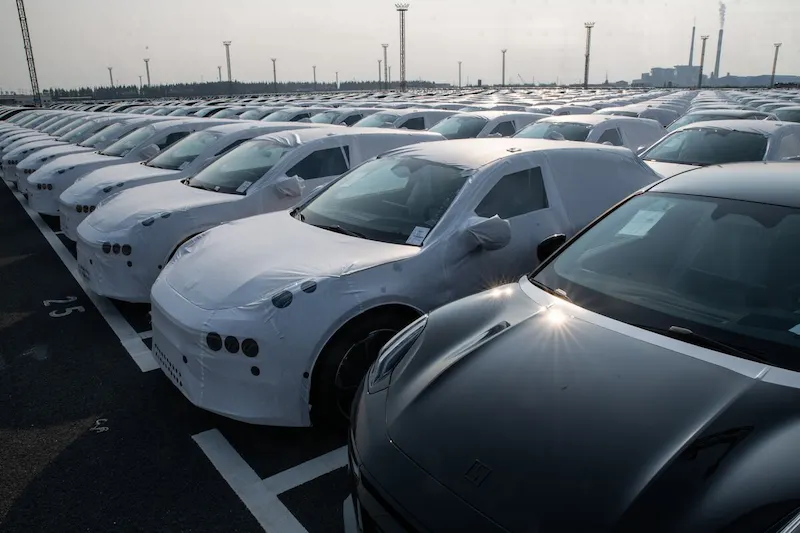


The availability of affordable electric vehicles (EVs) in the United States seems to pale in comparison to other regions, such as Europe and China. While European and Chinese drivers have a wide array of options, including small and midsize EVs with budget-friendly price tags, American consumers are limited in their choices. The main reasons behind this disparity lie in logistics and politics.
US automakers justify the lack of affordable EVs by citing profitability concerns. To fund investments in electrification, they prioritize the production of trucks, SUVs, and premium models. This conflict is at the core of the ongoing United Auto Workers strike, as factory workers fight to maintain their pay and benefits in an EV-dominated industry, while carmakers argue that meeting union demands would hinder their ability to go electric and remain profitable.
In contrast, China has emerged as a global leader in electric vehicles, with an estimated 60% share of new passenger EV sales worldwide this year. Many of these Chinese EV options are small and affordable, and some are even considered cheap. For example, BYD's Atto 3, a compact crossover with advanced battery technology, costs just $20,000 in China. However, none of these affordable Chinese EVs are making their way to the US market.
The explanation for this lies partly in logistics and partly in politics. Despite the US having a history of embracing foreign car brands, entering such a competitive market presents significant challenges. Foreign automakers face a disadvantage from the outset due to a 2.5% tariff imposed on most imports. Additionally, two major obstacles greatly hinder foreign competition in America: the "chicken tax" and the tariffs on cars made in China.
The "chicken tax" originated from a 1964 dispute over European tariffs on poultry, resulting in a 25% tax on imported trucks. This tariff has provided Detroit's truck manufacturers a significant advantage, with Japanese brands circumventing it by establishing factories in the US. Today, any foreign automaker aspiring to enter the lucrative American truck market faces difficult economic considerations due to this tax.
The tariffs on Chinese cars are another significant barrier. In 2018, former President Donald Trump implemented tariffs on approximately $370 billion of imports from China annually, including a 27.5% tariff on cars manufactured in China. These tariffs remain in place today, even under the Biden administration. In contrast, Europe imposes only a 9% tariff on Chinese cars, allowing them to trickle into the European market.
Despite overcoming tariffs, entering the US market presents further challenges for Chinese car manufacturers. Most Chinese cars are not engineered with US safety regulations in mind, necessitating expensive and elaborate certification processes to meet those standards. Additionally, building a robust retail network and addressing service and warranty concerns further add to the cost of entry.
Establishing brand recognition is another obstacle for newcomers. Both foreign car companies and electric vehicle startups must invest heavily in marketing to gain visibility in a market dominated by established brands. Even well-known foreign automakers face difficulties in capturing American buyers' loyalty. Fiat, for instance, has not fared well in the US market, while brands like Mitsubishi and Isuzu have struggled to gain traction. Mazda, on the other hand, has managed to maintain a foothold but faces ongoing challenges.
Even if Chinese automakers were to overcome the economic, logistical, and marketing hurdles, they would face political opposition in the US. American politicians are unlikely to support an automotive market evolution that appears to favor Chinese companies over American ones. The recent tension between the European Union and China over the influx of cheap Chinese electric cars highlights the resistance to such market dynamics.
The future of the US EV market is partially dependent on the outcome of the UAW negotiations. With the majority of US car production occurring in unionized plants, concessions made by carmakers to the union could lead to fewer car models, reduced vehicle production, and higher prices. Detroit and its manufacturers are moving away from affordable starter cars, while Chinese factories specialize in producing them. However, resolving this disparity is unlikely to occur in the near future.