


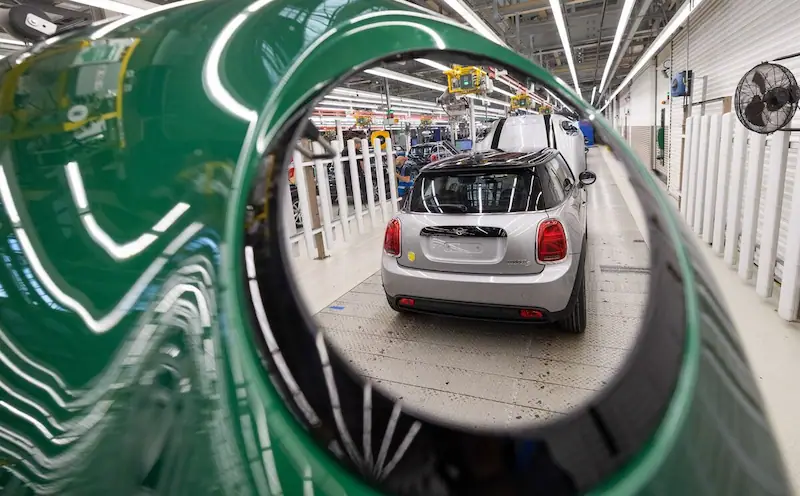


The French government has emerged as the main obstacle in the ongoing discussions to delay the implementation of post-Brexit tariffs on electric vehicles (EVs) between the UK and the European Union (EU). This stance is causing concern among other EU member states, who are in favor of a one-off extension of the deadline. The French government's reluctance is driven by fears that granting such a delay may be seen as giving in to the UK's demands, potentially discouraging battery investments within the EU. However, this position is at odds with the potential damage that the tariffs could cause to French carmakers, such as Renault, Peugeot, and Opel owner Stellantis.
The issue at hand revolves around the possibility of EVs traded between the UK and the EU facing a 10% tariff starting next year if less than 45% of their value comes from the EU region, as stipulated in the post-Brexit agreements. European car manufacturers are urging for a three-year extension to this phase-in period to allow more time for the development of the region's battery supply chain. The industry estimates that failure to delay the tariffs could cost them €4.3 billion over the next three years and would provide an advantage to their Chinese competitors.
The French finance ministry declined to comment on the matter. However, sources reveal that France is concerned that granting a delay would send a political message that a country can enjoy the benefits of leaving the EU's single market without bearing the associated costs. This concern reflects the French government's unwillingness to compromise on the principles set forth by the Brexit agreement.
Despite these differing opinions, there is optimism that an agreement can be reached before the looming deadline at the end of the year. It is worth noting that the UK accounts for nearly a quarter of EU EV exports and is not subject to tariffs, whereas UK imports from China have increased significantly, constituting approximately a third of sales last year, despite the imposition of a 10% tariff. If European vehicles were to face the same tariff, they would undoubtedly face a competitive disadvantage.
This issue has also caused division within the European Commission. While the Internal Market Commissioner, Thierry Breton, has stated that the EU cannot alter the Brexit agreements to appease the car industry, the EU's Trade Chief, Valdis Dombrovskis, believes that the imposition of tariffs by both the EU and the UK would only benefit China and harm the European industry.
In recent weeks, the European Automobile Manufacturers' Association, the leading lobby group for European car manufacturers, has intensified its efforts to delay the implementation of EV tariffs. They argue that such tariffs could reduce car production in the region by 480,000 units over three years. The association has been engaging with various stakeholders, including German labor unions and European battery makers, to rally support for the extension.
As the EU seeks to bolster EV production within the region and reduce dependence on China, critics argue that shifting supply chains takes time. Currently, most EV manufacturers rely on Asian suppliers, with Chinese companies like Contemporary Amperex Technology Co. dominating the market. It is unlikely that meaningful competition from other regions will emerge soon.