


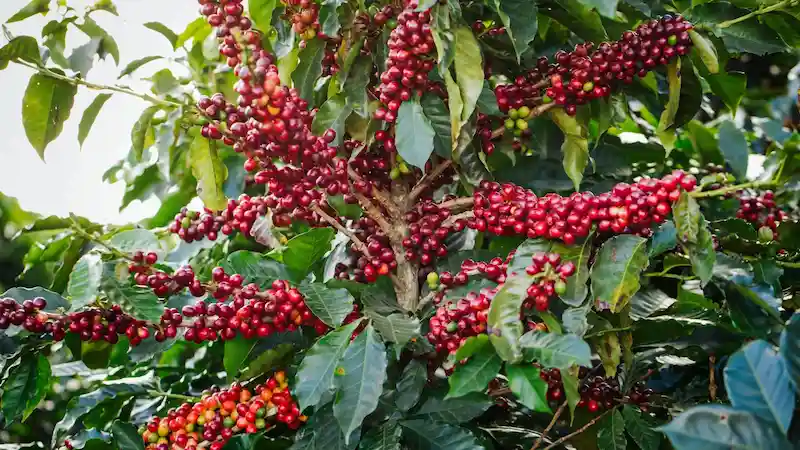


The coffee industry, especially the popular arabica variety, is facing a significant threat from climate change. The Inter-American Development Bank (IADB) warns that rising temperatures could reduce the suitable area for growing coffee by up to 50% by 2050. This poses a huge challenge for coffee farmers who rely on specific temperature, light, and humidity conditions.
Starbucks, as one of the largest coffee purchasers globally, is taking action to address this issue. For over a decade, the company has been working on developing new arabica varietals that are resilient to the changing climate. Their agronomists have been breeding different types of coffee trees, aiming to find varieties that produce high fruit yields in a shorter time frame and have resistance to coffee leaf rust, a disease exacerbated by climate change.
After a careful selection process, Starbucks has identified six new varieties that meet their standards for taste and flavor. Farmers can access a catalog describing these varieties at Starbucks' Hacienda Alsacia coffee farm in Costa Rica. The catalog provides information about the flavor profiles, growing characteristics, altitudes suitable for cultivation, plant size and structure, and the number of years until first production.
One of the key advantages of these new varietals is that some can be harvested in a shorter two-year cycle, rather than the traditional three or four years. This means a faster and increased coffee production, which is beneficial for both Starbucks and its suppliers.
However, Starbucks acknowledges that developing climate-resistant coffee varieties is only one part of the solution. Suzanne Shriner, president of Lions Gate Farms in Hawaii, explains how coffee farmers are also grappling with the impacts of climate change, such as more severe and intermittent rainfall, which is challenging for coffee plants. Similar to Starbucks, farmers in Hawaii are working closely with organizations like World Coffee Research to find solutions to coffee leaf rust and other climate-related issues.
Arabica coffee is particularly vulnerable to climate change due to its susceptibility to diseases and water stresses. Miguel Gomez, a food marketing professor at Cornell's Dyson School of Applied Economics and Management, emphasizes the urgent need for more climate-resistant arabica varieties. However, Monika Firl, senior advisor for Fairtrade International's coffee program, cautions that there is no single "silver bullet" solution for climate change, and a shift away from industrialized coffee farming towards a more sustainable and eco-friendly approach is necessary.
Starbucks has recognized the risks posed by climate change to its coffee supply chain. In its annual report, the company highlighted that the increasing cost and decreased availability of high-quality arabica coffee beans could have adverse impacts on its business. As part of their efforts to secure the supply chain, Starbucks has been distributing climate-resistant seeds, as well as coffee rust resistant trees, to farmers. Over the past five years, they have given away millions of seeds and aim to distribute 100 million trees by 2025.
While Starbucks' breeding program and distribution of climate-resistant seeds have been steps in the right direction, the company continues to invest in research and development to adapt to climate change. They are committed to finding new varietals that balance taste and resilience, securing their coffee supply and protecting the livelihoods of the countless farmers they rely on.
In conclusion, the coffee industry, particularly arabica coffee, faces an uncertain future due to climate change. Starbucks' innovative approach of developing climate-resistant coffee varieties and supporting farmers through seed and tree distribution is crucial in ensuring the sustainability of the industry. However, a comprehensive and sustainable approach is needed to address the broader impacts of climate change on the coffee farming ecosystem.