


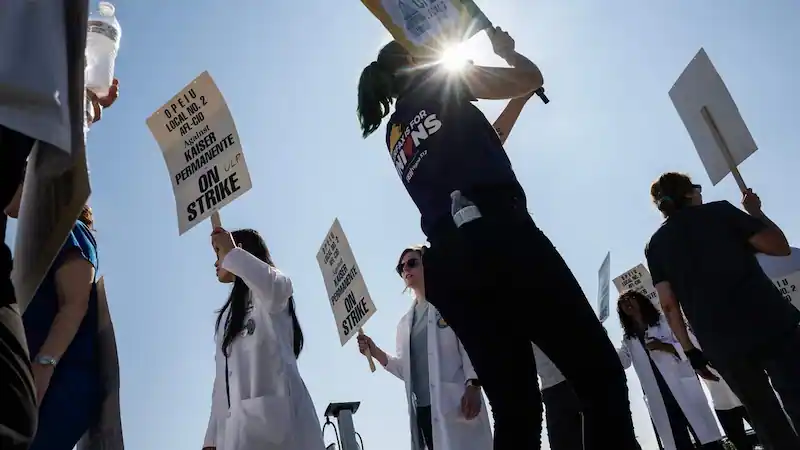


The largest healthcare strike in US history has entered its second day as more than 75,000 workers at Kaiser Permanente walked off their jobs on Wednesday. Represented by a coalition of unions comprising 40% of Kaiser Permanente’s staff, the striking employees are spread across four states - California, Colorado, Washington, and Oregon. On Wednesday, nearly 200 workers from Kaiser facilities in Virginia and Washington, DC, also joined the picket lines for a day. While the work stoppage is scheduled to end early on Saturday morning, the coalition has warned of a longer strike in November if a new employment contract cannot be negotiated by then.
Kaiser Permanente spokesperson Hilary Costa stated that negotiations between the coalition and the company concluded without a settlement. However, some tentative agreements have been reached, and for the first time in bargaining, Kaiser agreed to across-the-board wage increases. The union coalition, on the other hand, has stated that it is awaiting a meaningful response from Kaiser executives regarding key priorities such as safe staffing, outsourcing protections, and fair wages to reduce turnover.
The striking workers are demanding higher pay and improved benefits. One of their main concerns is the chronic staff shortage, which they claim has led to overworked and burnt-out employees, particularly in the aftermath of the pandemic. A wide range of roles are represented in the strike, including nursing staff, dietary workers, receptionists, lab technicians, and pharmacists. Many employees have cited acute short-staffing, calling it dangerous. Patients have reportedly faced longer wait times, and there have been instances of falls due to lack of assistance.
According to Kaiser Permanente, labor shortages are a prevalent issue throughout the healthcare industry, with burnout affecting up to two-thirds of healthcare staff nationally. To address the problem, the company claims to be actively hiring more staff, having already hired over 10,000 people in union-represented jobs this year. However, the striking workers argue that increased pay and benefits would result in more effective recruitment and retention.
Pay remains a sticking point in the negotiations. As of Wednesday, Kaiser Permanente offered wage increases of 5% in the first three years of the new contract and 4% in the final year to all unionized employees. The coalition, however, has not accepted this offer and is seeking a 6.5% increase in the first two years and a 5.75% increase in the final two years. Another key demand is to increase the minimum pay for unionized employees from $21 per hour in 2024 to $23 per hour, which has not been agreed upon by Kaiser.
The striking workers have highlighted the rising cost of living as another pressing issue. Many of them claim that they cannot afford to live in the cities where they work, resulting in some resorting to sleeping in their cars. Kaiser Permanente contends that it is a leader in pay and that its proposals in bargaining would maintain its position. The company asserts that leaving for a similar job at another organization would, in some cases, mean a pay cut of over 20% and reduced benefits for employees.
The historic strike takes place amidst widespread labor activity across the United States, with workers from various industries advocating for better pay and benefits. Particularly in the healthcare sector, employees have been striving for safer and more secure work environments in the wake of the pandemic. Notably, this is the first-ever national strike effort at Kaiser Permanente.