


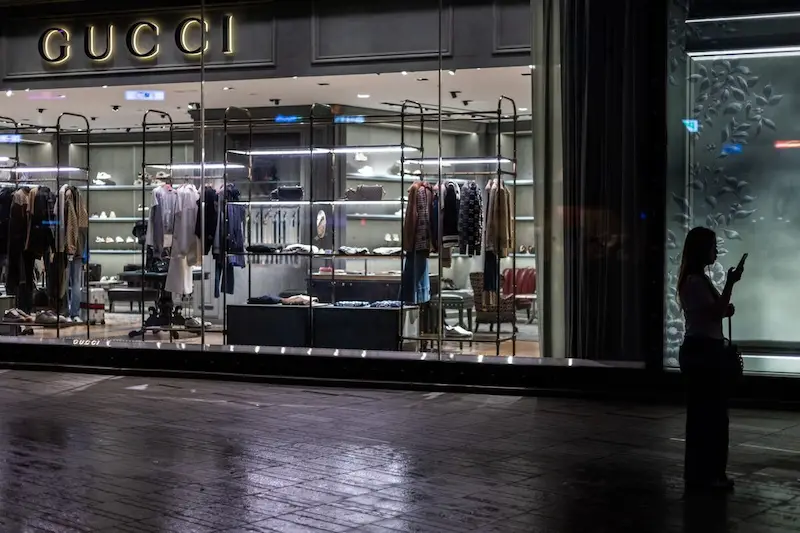


The COVID-19 pandemic has brought about the luxury-goods industry's first slowdown, revealing which brands are thriving and which are struggling. In the face of weakening global demand, Kering SA, the company behind Gucci, has issued a warning that its flagship brand will experience a decline in profitability this year, with no signs of rebounding until 2024. The internal turmoil within Gucci only exacerbates the challenges it faces, causing it to be hit harder than its rivals.
In stark contrast, French luxury brand Hermes International has managed to insulate itself from the downturn. With an overwhelming number of affluent customers eager to purchase its $10,000 handbags, Hermes continues to enjoy strong demand and financial success. This disparity in performance highlights the varying fortunes of luxury brands in the current market.
The initial signs of a slowdown emerged about a year ago when US consumers began curbing their spending on entry-level luxury goods. In China, an uncertain economic landscape and high youth unemployment dashed hopes that consumers would splurge on luxury items after the strict lockdown measures of the previous year. While consumers have increased spending, it has not reached the anticipated levels.
Even LVMH Moet Hennessy Louis Vuitton SE, the luxury giant known for its wide range of brands such as Christian Dior and Bulgari, disappointed investors recently. Growth within its fashion and leather goods segment fell short of expectations, and its wines and spirits business suffered a decline due to waning demand for Cognac in the US.
Analysts suggest that the sector is becoming increasingly polarized. Brands like Hermes, with more resilient business models and lower exposure to aspirational consumers, continue to outperform the market. Italian luxury brand Brunello Cucinelli, specializing in cashmere, has also thrived by riding the wave of "quiet luxury." On the other hand, brands like Kering, Richemont (owner of Cartier), and Burberry have experienced stock declines of 10% or more this year. Salvatore Ferragamo, a high-end shoemaker, has seen a significant drop of nearly 30%. Even LVMH, which earlier this year achieved a market capitalization of $500 billion, has seen its value decrease by approximately $140 billion.
As luxury houses navigate the challenges presented by the industry's slowdown, they must also contend with geopolitical tensions in the Middle East, an issue highlighted by both Hermes and Kering. Potential impacts on tourism are a significant concern.
The recent slowdown follows a period of strong demand when consumers, armed with pandemic savings, indulged in luxury purchases. LVMH had hinted at this cooling down period in July and reiterated the message this month, indicating that even its successful Christian Dior brand would not sustain growth rates of 30% annually.
At LVMH, quieter brands such as Loro Piana and Loewe have outperformed the fashion and leather goods unit, steering away from ostentation. Phoebe Philo, renowned for her minimalist and logo-less designs at Celine, is also set to launch her own brand on October 30, backed by LVMH. This shift towards simplicity underscores the changing preferences of luxury consumers.
In this complex and evolving landscape, luxury brands must adapt and differentiate themselves to survive and thrive. While some brands continue to navigate the challenges, others must reevaluate their strategies to reclaim success in the post-pandemic luxury market.