


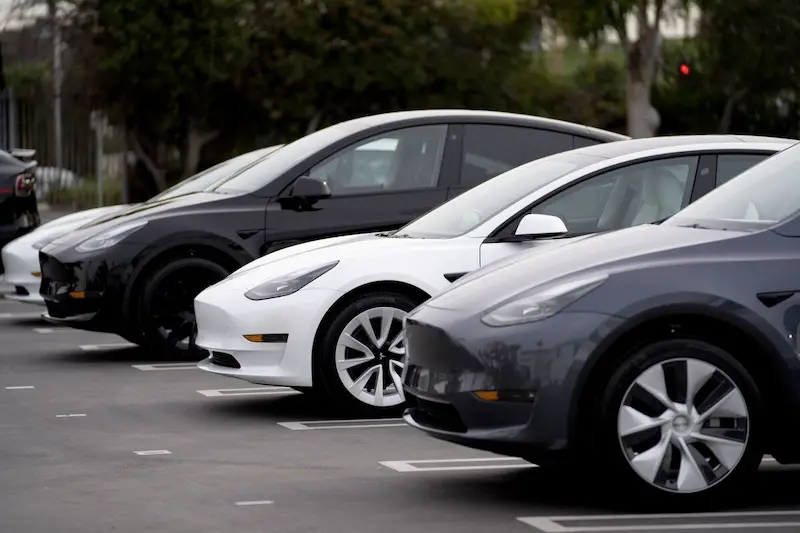


As the electric vehicle (EV) market experiences a significant expansion, industry leaders such as Tesla, General Motors (GM), and Ford are facing a new challenge: declining demand. While the adoption of battery-powered vehicles continues, the pace of growth has considerably slowed down. Consequently, automakers are adopting a more cautious approach to their investments.
Collectively, companies have invested around $100 billion in North America to develop EVs that appeal to mass market consumers, moving beyond luxury buyers and early adopters. However, high inflation and interest rates are making it difficult for everyday people to afford vehicle purchases, making it harder for EV makers to win their business. Many auto executives have expressed concerns that consumers have reached their spending limits.
For instance, the Ford F-150 Lightning has a starting price of about $50,000 before federal tax credits, while the gasoline-powered version starts at under $37,000. Similarly, the electric version of General Motors' Chevrolet Blazer costs a minimum of $56,000 before tax credits, compared to the gasoline counterpart's starting price of around $37,000.
The higher cost of EV batteries compared to internal combustion engines means it will be at least three more years before prices become comparable, according to Bloomberg BNEF research. This poses a challenge for Tesla as well, despite being the only profitable US automaker in the EV business. The company has cut prices significantly this year, up to 30% in some cases, to maintain sales volumes. In September, the average price paid for an EV in the US was $50,683, lower than the previous year's $65,000.
The need for price reductions has impacted companies' profitability. While Tesla experienced a 51% growth in automotive revenue last year, this figure dropped to only 5% in the third quarter of this year. Automotive gross margin also declined to 16.3% in the quarter, the lowest in over four years.
In light of these market dynamics, Tesla CEO Elon Musk announced a potential delay in plans for a new $1 billion plant in Mexico, a significant shift from the company's earlier enthusiasm about rapid growth. Similarly, GM postponed its expansion plans for electric pickup truck production, mainly due to uncertain EV demand and the need to make changes to lower manufacturing costs.
Ford has already announced a delay in $12 billion of its planned $15 billion EV-related investments. The company will alter its production plans for the electric Mustang Mach-E and push back the construction of a second battery plant in Kentucky.
Ford's Model e unit, responsible for the company's electric vehicle operations, has reported operating losses of $1.3 billion in the last quarter and over $4 billion this year. The automaker projects a $4.5 billion loss on EVs this year. These challenges raise concerns about the automakers' ability to successfully transition to EVs in the long run.
The slower growth in EV deliveries is affecting numerous global automakers, including Mercedes-Benz and Volvo Car, and is rippling through the auto parts supply chain. Lithium-ion battery maker LG Energy Solution has expressed its disappointment with lower sales expectations for the upcoming year.
While EV sales continue to grow, the pace of growth is declining. In the United States, EV sales have increased by almost 50% in the first nine months of this year compared to the previous year. However, the sequential growth rate was only 6% in the third quarter, a significant slowdown from the 14% growth in the previous quarter.
Despite these growing pains, technological changes often create challenges during the adoption phase. It remains uncertain when these difficulties will subside. As more companies introduce long-planned EV models into a less receptive market, inventory levels are rising. At the end of September, automakers had 88 days' worth of EV inventory, compared to 56 days for conventional models.
Moreover, automakers may struggle to rely on corporate buyers and rental car fleets as much as before. Hertz Global Holdings' CEO has announced a slowdown in EV purchases due to lower resale prices and increased depreciation costs.
GM aims to reach the mass market next year with a lower-priced version of its Chevrolet Equinox EV, followed by a more affordable Chevy Bolt in 2025. However, with concerns surrounding charging infrastructure, the initial price was raised from $30,000 to $35,000, offering a range of 319 miles on a full charge.
Tesla's Elon Musk remains cautious about the global economy before making decisions about the Mexican plant, acknowledging that the company's past 50% growth rates may no longer be achievable. He emphasizes the need to prioritize affordability, stating that informing people about a great car is irrelevant if they cannot afford it.
While evidence of a market meltdown is yet to materialize, the industry acknowledges the challenges associated with this technological shift. With increasing inventory and a slower pace of growth, automakers must navigate these obstacles and find innovative solutions to make EVs more affordable and accessible to the mass market.