




As large V8-powered cars such as the Dodge Charger and Challenger near the end of their production cycle, a new type of gasoline engine has emerged on American roads - the three-cylinder engine. While many Americans haven't given much thought to the number of cylinders in their car's engine, the idea of a three-cylinder engine can raise concerns about whether it provides adequate power or might be noisy and rough-running. However, the increasing use of three-cylinder engines is part of a general trend towards "downsizing and boosting" as fuel economy and emissions regulations become stricter.
In the past, vehicles that would have once been powered by eight-cylinder engines now have turbocharged six-cylinder engines, and the Ford Mustang still comes with a big V8 for hard-core enthusiasts. However, the alternative choice isn’t a V6 any longer, but a 315-horsepower turbocharged four-cylinder. Now, turbocharged three-cylinder engines are providing the same sort of downsized alternative for vehicles that once would have had four-cylinders. They save gas compared to a four-cylinder engine because they’re smaller and lighter and, with fewer moving parts, they have to overcome less of their own internal friction. Improvements in engine technology have made them both more powerful and smoother-running — or at least smoother-feeling — than they would have once been.
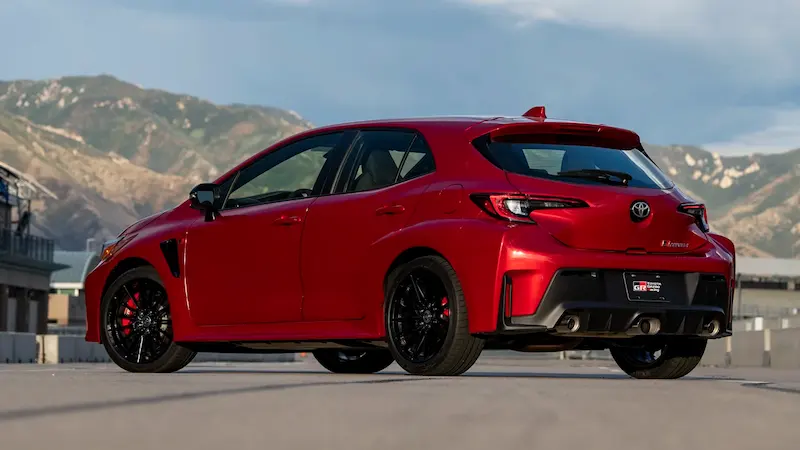
For the 2023 model year, there are ten different models available in the United States with three-cylinder engines, according to Edmunds.com. These include three Minis, the Mitsubishi Mirage, Ford Escape, Ford Bronco Sport, Chevrolet Trailblazer, Buick Encore GX, Nissan Rogue and the Toyota GR Corolla. In fact, the all-wheel-drive Toyota GR Corolla, which has a 300 horsepower three-cylinder, is marketed as a performance model for enthusiasts. While it’s not particularly quiet or smooth, since that’s not a priority for the intended customer, the engine is powerful, fast-revving and a lot of fun, especially paired with a manual transmission, which is the only way the GR Corolla comes.
Among the benefits of a three-cylinder engine is that each cylinder can be bigger. In a four-cylinder engine of the same size each cylinder would have to be smaller. Gasoline engines work by moving air in and out very rapidly, and having bigger cylinders means the engine can have larger intake and exhaust valves, easing the movement of air and increasing power. However, these small power plants work best in vehicles that were designed specifically for them. The challenge is that there are fewer "explosions" for every rotation of the engine - three, instead of four in a four-cylinder engine or six in a six-cylinder - and they each must be stronger to produce similar power. That results in strong low-frequency vibrations that can be harder to mask in a vehicle. The engines themselves have extra moving parts just to cancel out some of these vibrations, but it’s helpful if the entire vehicle is also designed to dampen them.
This trend towards three-cylinder engines may not continue much longer, as electric cars are providing significant benefits for automakers trying to reach their required Corporate Average Fuel Economy targets. The trouble and expense of developing smaller engines may not be worth it much longer. However, GM currently offers two different three-cylinder engines and plans to continue selling them even as the company moves towards selling only electric passenger vehicles by 2035.