


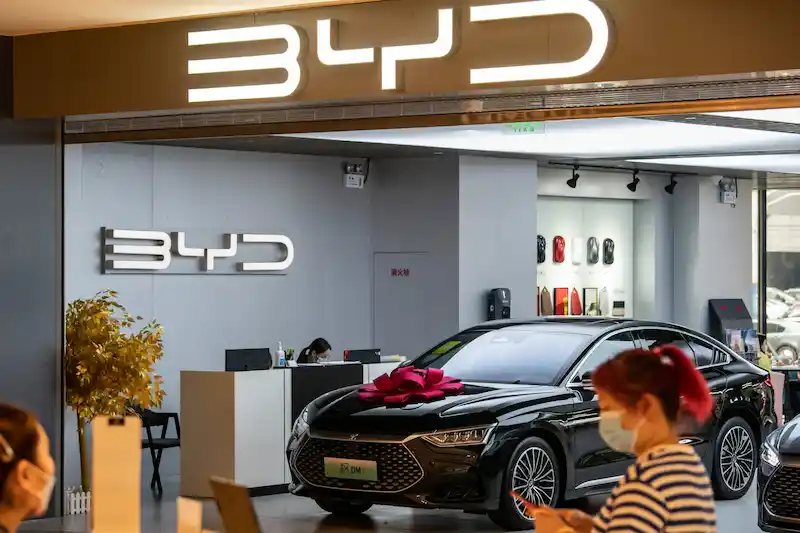


In China, the world's largest automobile market, a price war has erupted in the electric vehicle segment. The competition has intensified as more than 40 car manufacturers have discounted electric and gas-powered vehicles in China this year. Dealerships and car brands are offering deep discounts and giveaways to stay competitive. The discounts have amounted to several hundred dollars for cheaper models, and tens of thousands of dollars for higher-end offerings.
The severity of this cycle of price cuts is unlike anything seen before, according to Tu Le, a managing director at the Beijing consultancy Sino Auto Insights. China's car sales fell 13 percent in the first quarter of 2021, while sales of traditional automobiles plunged, and growth in electric vehicles slowed, according to the China Passenger Car Association. China's EV market has grown rapidly since 2020, doubling in sales last year, propped up partly by government subsidies. When that program expired in December after 13 years, the competition intensified to attract buyers in an already crowded market segment.
At the same time, traditional automakers are scrambling to unload inventory of older cars before the implementation of tougher national emissions standards in July that will make it difficult to sell diesel- and gas-powered vehicles. The price cuts are not limited to China. Tesla has also lowered prices in the United States and Europe, and its competitors have followed suit.
China is the leading market for electric cars, and more were sold there last year than in the rest of the world combined. Foreign automakers see an urgent need to gain a foothold in China to develop the know-how and manufacturing scale necessary to compete globally. Cui Dongshu, secretary general of the China Passenger Car Association, said the price war “will definitely continue” because of the importance of producing EVs in large quantities.
Car companies and dealerships are now pulling out all the stops for customers. Some dealers are offering free vacations or bottles of perfume in exchange for test drives, while some eager sales teams are stalking charging stations in hopes of luring drivers away from the competition. The fear among some executives is that consumers will become accustomed to waiting for price reductions. The China Automobile Dealers Association said last month that foot traffic to dealerships has soared after markdowns, but orders have decreased.
Despite the intense competition, William Li, the chief executive of Nio, one of the top Chinese electric vehicle companies, said he planned to keep Nio out of the price war, which he called “unhealthy and unsustainable.” For traditional gas-powered automakers, “cutting prices is their last resort in trying to secure market share,” he said in a statement. The similarities between the frothy EV market in China and the early days of the smartphone boom are evident, with many non-Chinese brands such as Samsung Electronics, once a mobile phone leader in China, barely registering.