


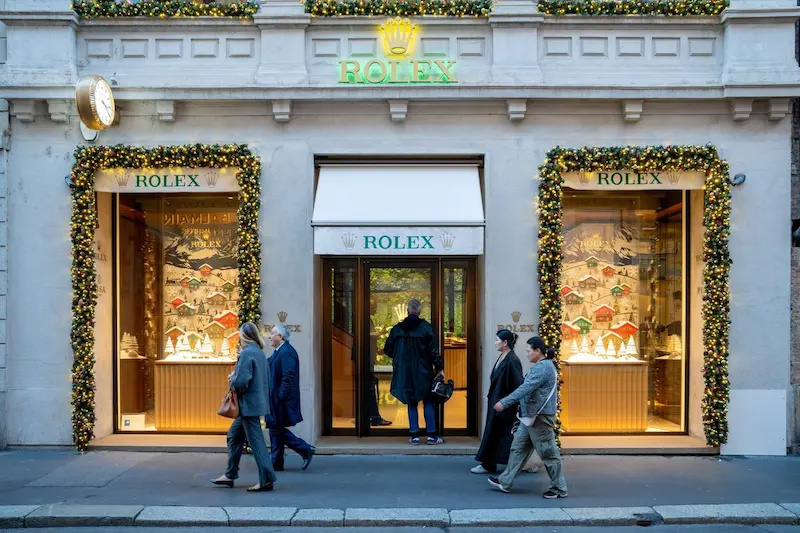


The Swiss luxury watch industry, which experienced an unprecedented boom during the pandemic, is now facing a slowdown. Over the past three years, there was a surge in demand for luxury watches from prestigious Swiss brands like Audemars Piguet and Rolex, resulting in record-breaking Swiss watch exports totaling nearly $28.5 billion in 2022. However, multiple factors are now taking their toll on the industry, including higher interest rates, sluggish economic growth, aggressive price hikes, and increased production.
In recent months, watch manufacturers have witnessed a cooling demand, and prices on secondary markets have dropped significantly. Executives across various brands have come to terms with the fact that the industry is rapidly downshifting. François-Henry Bennahmias, CEO of Audemars Piguet, acknowledged that the extraordinary growth witnessed in 2021 and 2022 was unimaginable and believed that such a phenomenon would not occur again.
The downturn in the watch industry matches the weakness observed in the broader luxury goods sector, where companies like LVMH and Kering SA have experienced sales setbacks due to inflation and recession concerns. This trend undermines pricing power, putting pressure on margins and profits. In November, Richemont, the owner of Cartier, reported a 3% decline in watch sales and a 17% plunge in the Americas.
The decline in Swiss watch exports became evident in July when there was a year-on-year decline for the first time in over two years. The average growth rate in recent months has fallen far short of the pace observed in the first half of the year. Additionally, the value of used watches has been dropping for over a year, with the Bloomberg Subdial Watch Index, which tracks 50 top-traded models, declining about 42% since April 2022.
Ironically, the boom in the luxury watch industry began amidst the pandemic in early 2020. As people were confined to their homes, they started yearning for luxury mechanical watches from iconic Swiss brands. The desire for these timepieces grew further as influential social media personalities showcased them on platforms like Instagram and YouTube. When restrictions eased, consumers aimed to signify wealth and taste through their wristwear.
However, as the industry resumed production, substantial backlogs and long waiting lists arose. The watches became highly sought-after collector's items. The US overtook China as the largest market for Swiss watches in 2021, further boosting the sector to new heights. Nonetheless, recent market conditions have been less promising.
Ben Kűffer, the CEO of Norqain, a family-controlled watchmaking company, noted that sales have been slower than expected, especially in the US. He attributed part of this slowdown to the shift in consumer sentiment due to the Hamas-Israel conflict. The Swiss watch industry is essential to the economy and employs about 60,000 people, making the recent slowdown worrisome for the country as a whole.
Some of the decline in the industry may be attributed to its self-inflicted problems. In response to booming demand and rising inflation, watchmakers seized the opportunity to increase prices. Brands like Rolex, Omega, and Jaeger-LeCoultre hiked prices, with Omega even raising prices by 8% in the US. Furthermore, watchmakers increased production to meet demand, resulting in a surplus of watches in the market.
Industry veteran Jean-Claude Biver, known for his revival of Blancpain and association with Omega, believes that Swiss watchmakers often produce too many watches, even when demand is slowing down. He emphasized the importance of customer-centricity and the need for modesty and humility.
As the Swiss luxury watch industry faces a slowdown, it remains to be seen how brands will navigate this challenging landscape. The once carefree spenders who fueled the boom in recent years may now approach luxury purchases with caution. The industry will need to find a balance between pricing strategies, production levels, and meeting evolving consumer preferences to regain momentum in the post-pandemic world.