


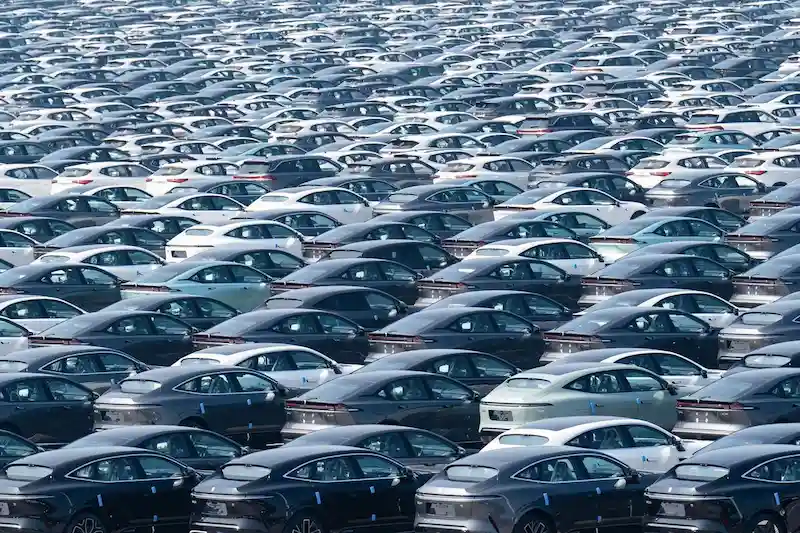


Turkey has joined the growing list of countries cracking down on Chinese electric vehicle (EV) imports. This move comes shortly after the European Union launched its own investigation into China's EV subsidies. Under a recent Trade Ministry decree, companies importing EVs into Turkey must have a minimum of 140 authorized service stations spread evenly across the country. Additionally, they are required to open a call center for each brand. These stringent regulations are widely perceived as targeting Chinese vehicles, with imports from the European Union and countries with free-trade agreements exempt from the decree. However, complying with these requirements by the end of the month proves to be an arduous task for many importers.
This sudden development represents a setback for companies involved in the sale of Chinese cars in Turkey, which is Europe's sixth-largest auto market. These companies are seeking modifications or, at the very least, a delay in implementing the tighter regulations to minimize disruption. "Not a single brand is in compliance as of today," lamented Erol Sahin, CEO of automotive consultancy EBS. The major hurdle faced by importers stems from the obligation to establish service stations themselves. This complicates deals with authorized third-party services and adds to the difficulty of meeting the requirements.
Turkey has witnessed a surge in the popularity of electric cars, mainly driven by the relative affordability of Chinese brands. Additionally, the local Togg electric car and Tesla's entry into the market have contributed to the growing demand. According to data from the industry association ODMD, EV sales in Turkey have increased nearly tenfold from the previous year up until November, accounting for 7.1% of total passenger car sales.
The introduction of these new rules aims to bring order and regulation to the rapidly developing EV industry in Turkey. Government officials believe that these regulations will create a controlled and sustainable environment for its growth. However, there are currently no plans to revise or delay the implementation of the rules, according to an official in Ankara. Critics argue that these strict regulations could hinder competition and impede the development of domestic companies like Togg.
China's top-selling car company, BYD Co., has already begun planning a nationwide authorized service network and signed contracts with dealers to provide services to customers in Turkey. Ismail Ergun, general manager of BYD Turkey, warned that if the regulations are implemented as planned, imports may be subject to lengthy delays at the border.
While the intention behind the regulations to protect consumers is valid, industry stakeholders urge authorities to take into account competition laws and ensure a fair approach towards existing dealer networks. Kagan Dagtekin, CEO of Dogan Trend Otomotiv, which distributes China's SAIC Motor Corp's MG brand, expressed the need to strike a balance and not hinder the growth potential of the existing dealer body.
China is Turkey's largest importer, and goods from China have contributed to a trade deficit nearing $100 billion as of November. Passenger car imports play a significant role in this deficit. In the first ten months of this year, China sold $184 million worth of EVs to Turkey, nearly double the total for the entire year of 2022. Earlier this year, Turkey imposed a 40% customs duty on EV imports from China, raising the total customs tax rate to 50%. This recent crackdown on Chinese EV imports further emphasizes Turkey's commitment to protecting its local industry and addressing its trade imbalance.