




Hong Kong's luxury property market is set to face increasing pressure as the city's leader takes a tough stance on illegal structures, a move that is likely to please Chinese President Xi Jinping and the public. In his efforts to address the glaring wealth disparities in the residential market, property prices could plummet even further.
President Xi had previously highlighted the desire of Hong Kong citizens for larger apartments, acknowledging it as one of their primary aspirations. While secondary home prices have already fallen over 20% from their 2021 peak, the reality remains that a modest 600-square foot apartment in Shatin, the city's most populous district, still fetches nearly 19 times the median annual income.
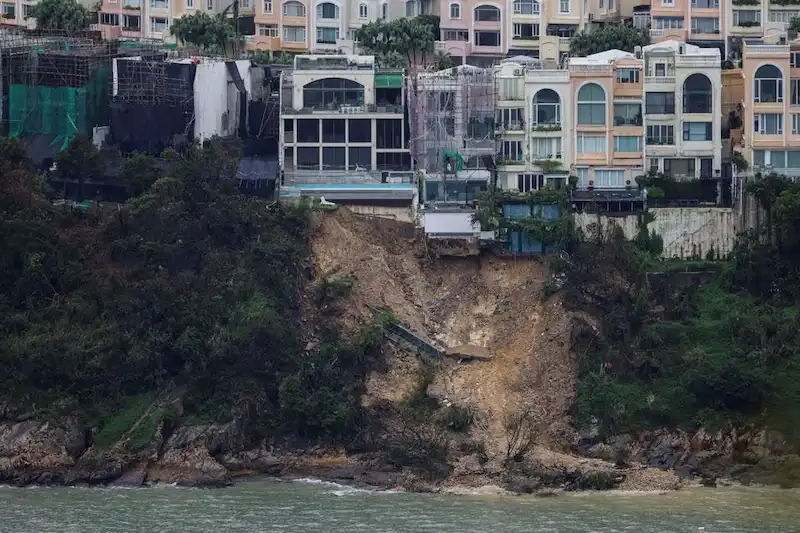
Chief Executive John Lee seems poised to tackle the issue head-on. He has expressed his intention to prosecute those who have constructed illegal structures and is even considering a comprehensive citywide survey to identify houses built on slopes. The urgency to act has been amplified by a recent incident in September, where torrential rainfall led to a landslide on Redhill Peninsula, revealing multiple unauthorized basements beneath several houses.
The initial impact of a serious crackdown would be felt by the affluent. Many luxury properties in areas like Redhill have become popular due to the ease of constructing expansive basements in cliff-side mansions. A zero-tolerance approach would undoubtedly cause these luxury apartments to plummet in value. However, the ripple effect of negative price movements could also drag down the wider property market.
The authorities' endeavor to address the issue is not without risks. Property transactions this year are already projected to fall below 2022 figures, which were historically low and not seen since 2013. Sun Hung Kai, CK Asset, and Henderson Land Development, major developers in Hong Kong, have already resorted to offering steep discounts on new apartments as sentiment in the market dips. The government relies heavily on stamp duty revenue, contributing approximately 20% of its annual income, and with a persistent fiscal deficit since the pandemic, there is added pressure to take action.
Furthermore, Chinese President Xi's efforts to curb property market speculation in mainland China make it difficult for Chief Executive Lee to ignore the issue. Chinese officials have attributed inequality as one of the root causes of social unrest in Hong Kong back in 2019. Moreover, Lee may encounter less resistance from local influencers given the diminishing influence of Hong Kong's tycoon landlords. Although change will certainly disrupt the status quo, the imperative to act is becoming increasingly urgent.
In his annual policy address on October 25, Chief Executive John Lee announced plans to propose lowering the prosecution threshold and increasing penalties for illegal residential structures in the coming year. He had previously stated on September 12 that homeowners in Redhill Peninsula, a luxury housing estate, would face prosecution following the attention drawn to potential illegal excavation due to a landslide.
To combat unauthorised building works, which involve additions or alterations made to properties without prior approval from the Building Authority, the administration is reportedly considering conducting a citywide survey of houses built on slopes. This comprehensive assessment aims to identify further violations throughout the city and ensure compliance with regulations.