


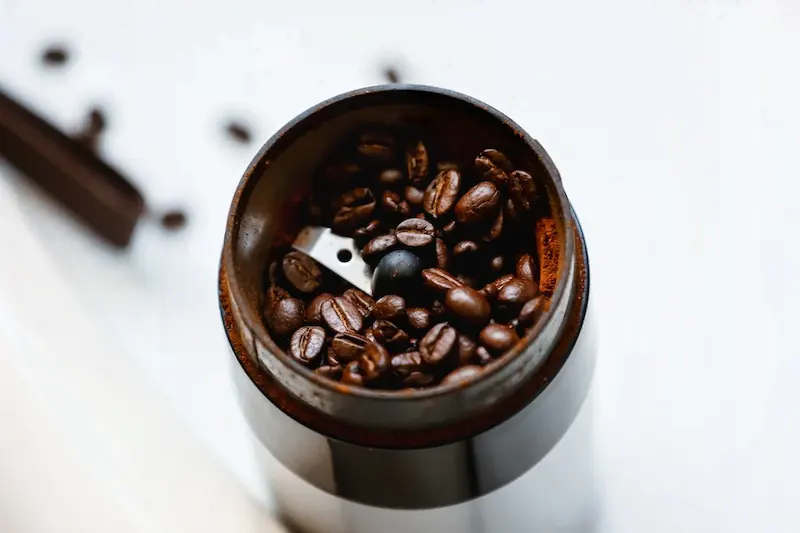


Coffee enthusiasts have long debated the merits of adding water to coffee beans before grinding them, and a recent study conducted by researchers at the University of Oregon sheds light on the science behind this technique. Initially, adding water was seen as a way to prevent the mess caused by static electricity when grinding coffee. However, the study reveals that the benefits of this method go beyond cleanliness and actually impact the flavor of the brew.
The messy scattering of ground coffee particles during grinding is a result of the static charge generated by the friction between the beans. Small water droplets act as insulators, dampening the effects of this static charge and preventing the coffee grounds from flying everywhere. Known as the "Ross droplet" technique, this method was originally borrowed from the materials production industry, specifically wood pulping.
While the primary motivation for adding water was to reduce mess, coffee enthusiasts speculated that the technique could have a more profound impact on the brewing process. They believed that by eliminating static electricity, water prevented the formation of microscopic clumps, which could lead to uneven extraction. Clumps create void spaces that water cannot penetrate, leaving some coffee untouched.
To test this theory, the research team employed a specialized tool used to measure electric charges on wildfire and volcanic ash. They carefully weighed the coffee before grinding, adding precise amounts of water with a micropipette. The study revealed that adding even small amounts of water effectively neutralized the static charge, allowing the coffee to exit the grinder without any charge. Furthermore, the addition of water prevented the formation of clumps, maximizing the surface area for extraction.
The ideal amount of water to add varies based on factors such as the roast type and grind coarseness. However, on average, the study found that adding water increased the extraction yield by approximately 10%. Although this increase may not always result in a noticeable difference in flavor, it solidifies the benefits of the "Ross droplet" technique.
Coffee expert Lance Hendrix, who independently tested the findings, believes that while the study offers valuable insights, further experiments with different grinder models are necessary. Nonetheless, he agrees that the benefits of adding water are plausible and contribute to our understanding of the complex process of grinding coffee.
Professional barista and coffee taster François Knopes also advocates for adding water to beans before grinding, especially for tasting evaluation in a home setting. However, he acknowledges that implementing this method in professional setups might be impractical due to time constraints. Knopes suggests alternative approaches such as improved grinding technologies or "de-clumping" devices to enhance extraction in coffee shops.
Although the practicality of adding water before grinding may currently pose challenges for everyday coffee brewing, the study signals the potential development of advanced technologies centered around this technique. As such, future advancements in coffee brewing may involve on-demand water addition to maximize flavor extraction.