


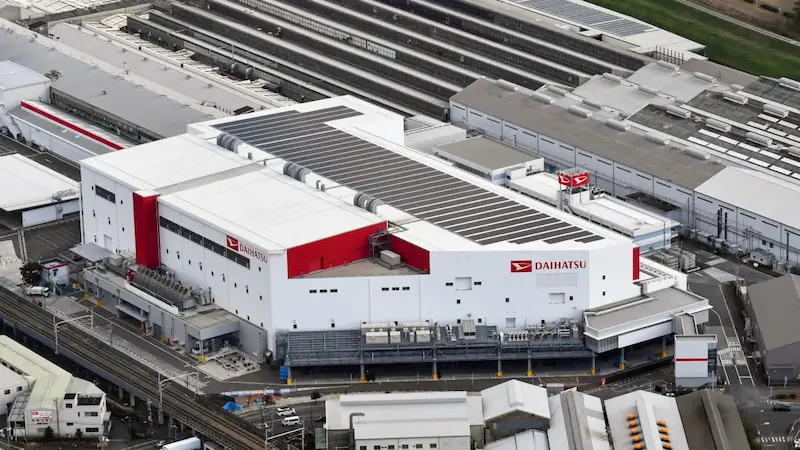


Daihatsu, the Japanese automaker owned by Toyota, has come to a screeching halt after revealing that it had forged safety test results for its vehicles over a span of more than 30 years. The brand, renowned for its production of small passenger cars, has suspended operations at all four of its Japanese factories, including its headquarters in Osaka. This decision, which went into effect on Tuesday, will impact approximately 9,000 employees involved in domestic production. The shutdown is expected to last until at least the end of January.
The suspension of production comes as Daihatsu grapples with a safety scandal that has sent shockwaves throughout the entire company. Last week, the automaker made a startling announcement, disclosing that an independent third-party committee had uncovered evidence of tampering in safety tests conducted on as many as 64 vehicle models, including those sold under the Toyota brand. In response to these findings, Daihatsu has temporarily halted the shipment of vehicles both domestically and internationally, emphasizing its willingness to cooperate with authorities to determine the best course of action going forward.
This scandal is not the first time Daihatsu has faced accusations of safety violations. In April, the company admitted to breaching crash test standards on more than 88,000 vehicles, primarily sold under the Toyota umbrella in countries like Malaysia and Thailand. At the time, the company revealed that certain upholstery in the front seat door had been improperly modified for some tests and acknowledged noncompliance with regulatory requirements for specific side collision tests. In May, Daihatsu uncovered further misconduct, admitting that incorrect data had been submitted for collision tests on two hybrid electric vehicle models. As a result, production and sales of these models were immediately halted.
The latest investigation into Daihatsu's safety practices casts a shadow over the company's reputation. The probe, conducted by an investigative committee, brought to light an additional 174 cases of data manipulation, false statements, and improper alterations employed by Daihatsu to secure safety certifications. Shockingly, some of these cases date back as far as 1989, with a clear upward trend in occurrences since 2014, according to the committee's report.
Unsurprisingly, news of the scandal had an immediate negative impact on Toyota's stock, causing a 4% drop in Tokyo. However, the company has since managed to regain some ground. In response to the crisis, Toyota has vowed to overhaul its subsidiary, stating that a "fundamental reform is needed to revitalize Daihatsu." The company recognizes the seriousness of Daihatsu's negligence in the certification process, acknowledging that it has shaken the very core of the company as an automobile manufacturer. Toyota plans to conduct a comprehensive reevaluation of management, operations, and the structure of the unit to remedy this grave situation.
Moving forward, the focus will be on repairing Daihatsu's damaged reputation and restoring trust among consumers. The level of deception and misconduct spanning three decades showcases the need for significant reform within the company. Toyota remains committed to addressing the issue head-on, driven by a steadfast determination to revive Daihatsu and reclaim its status in the industry. Only time will tell if these efforts will be successful in rebuilding Daihatsu's credibility and ensuring the safety and reliability of its vehicles going forward.