


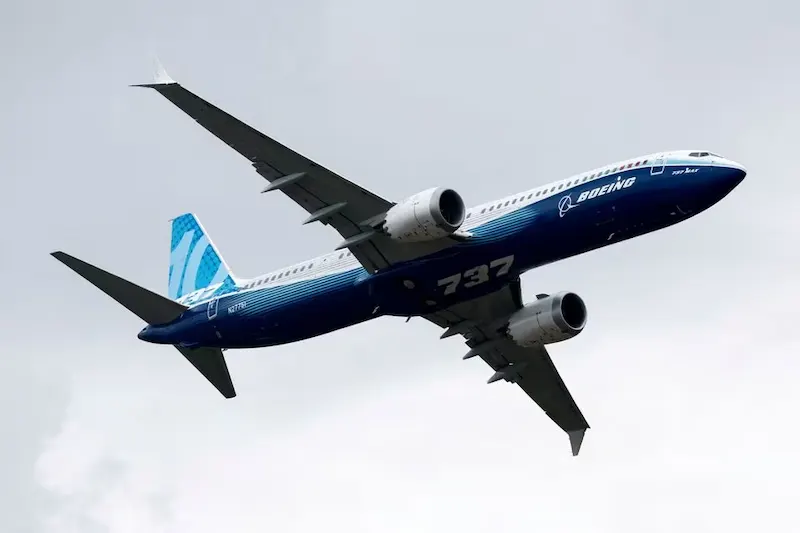


In a recent development, aircraft manufacturer Boeing has urged airlines to conduct inspections on their fleet of 737 MAX airplanes due to a potential issue with a loose bolt in the rudder control system. The Federal Aviation Administration (FAA) has stated that it is closely monitoring the situation and will take further action based on the findings of these inspections.
According to the FAA, Boeing recommended the inspections after a global operator discovered a bolt with a missing nut while conducting routine maintenance on the rudder-control linkage. In addition, Boeing found another undelivered aircraft with a nut that was not properly tightened. Boeing has assured that the specific issue identified has been resolved, but they are recommending inspections as a precautionary measure. The FAA and the customers of Boeing have been notified about the situation, and the company will provide regular updates on the progress.
Boeing has emphasized that the inspections are only required for the 737 MAX and not for the older-model 737 Next Generation planes. The manufacturer has recommended that airlines conduct these inspections within a two-week timeframe. However, Boeing has assured that the delivered 737 MAX aircraft can continue to fly safely, and production and delivery of the MAX will continue as planned.
Major domestic customers of the 737 MAX, such as United Airlines and American Airlines, have stated that they do not expect these inspections to disrupt their operations. Southwest Airlines, a carrier that exclusively operates the 737 NG and MAX, has not yet responded to inquiries regarding the issue.
To conduct the inspections, operators will need to remove an access panel and validate that the hardware has been properly installed, as specified by Boeing. The process is estimated to take around two hours. Boeing is also conducting inspections on undelivered 737 MAX aircraft before handing them over to customers. The FAA will maintain close communication with Boeing and the airlines throughout the inspections.
Air safety expert Anthony Brickhouse from Embry-Riddle Aeronautical University has stated that these inspections should be taken seriously, but he does not view it as a major concern for the flying public. Brickhouse believes that any potential issues with the rudder system would likely be identified during pre-flight checks, where flight crews routinely examine the condition of the aircraft's control systems.
It is worth noting that the 737 MAX has previously faced significant scrutiny following two fatal crashes in 2018 and 2019. These incidents led to a global grounding of the aircraft for 20 months, with Boeing making substantial efforts to address the issues and enhance safety. The FAA has been closely monitoring the recertification process for the 737 MAX, and the aircraft is gradually returning to service across the world.