


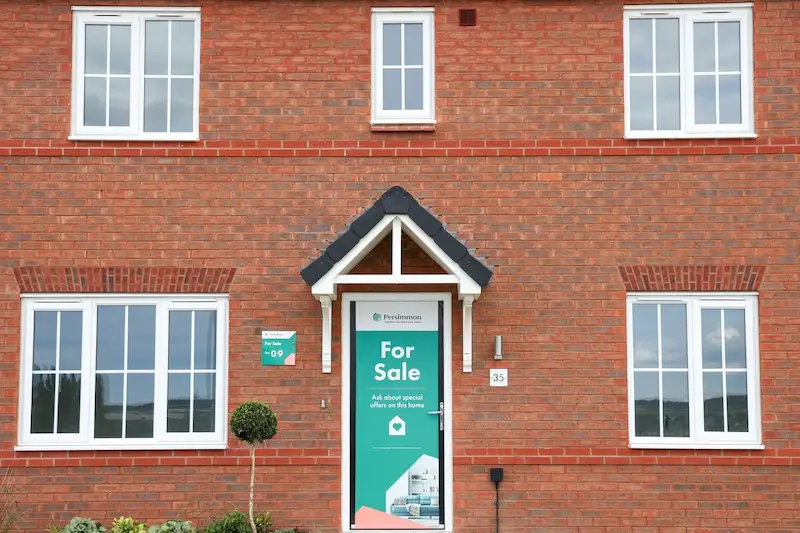


House prices in Britain are projected to become more affordable, offering an extended opportunity for potential homeowners to enter the property market. This trend aligns with forecasts of increasing wage growth and a possible stagnation, or even a slump, in house prices. Such affordability improvements would provide consumers with increased purchasing power and potentially address concerns among younger voters about the rising costs of mortgages and home purchases.
Experts believe that households stand to benefit from improving affordability, especially as real incomes are expected to rise in the coming year. Gabriella Dickens, a senior UK economist at Pantheon Macroeconomics, suggests that the combination of increased wages and more favorable house prices could enhance the ability of households to capitalize on the market.
Towards the end of 2021, the average house price in Britain experienced a 1.8% decline, amounting to £257,443, as reported by Nationwide Building Society. This decrease is significantly less severe than the predicted 10% drop anticipated by economists in December 2020. However, when accounting for inflation, house prices have declined by 11% in real terms.
Despite the pandemic, property prices have held up better than anticipated due to limited supply and stabilizing borrowing costs resulting from the Bank of England's efforts to mitigate the impact of the crisis. For the upcoming year, most forecasters predict only a moderate decline in house prices, ranging from zero to 2%. Oxford Economics holds the most pessimistic outlook, projecting a 4% drop. Nevertheless, these forecasts present a marked improvement compared to the previous year's predictions of steeper declines.
Conversely, wages are expected to surge ahead. Average total earnings are projected to increase by 7.1% between the fourth quarter of 2022 and 2023, followed by a 4% increase in the subsequent 12 months, and a further 2.5% rise in the following year, according to Bloomberg Economics. This continued rise in pay, driven by a tight labor market, is expected to augment household incomes and potentially prevent a severe crash in house prices. Consequently, this period could witness the longest stretch since the beginning of the century where wages outpace house prices.
Nationwide's Chief Economist, Robert Gardner, notes that if the economy remains sluggish and mortgage rates moderate only gradually, house prices are likely to decline slightly or remain relatively flat. Although economists commonly consider UK homes to be overvalued, with a 10% gap between prices and economic fundamentals, this issue is of particular concern to younger voters, including millennials, who find it increasingly difficult to enter the housing market.
As the general election approaches, the Conservative government seeks to address these concerns by considering a range of housing measures for its manifesto. These measures may encompass support for longer fixed-term mortgages, reducing the size of required deposits, and a potential revival of the Help to Buy program, indicating the government's intention to attract younger voters.
The outlook for housing affordability aligns with other indicators pointing to an easing of the cost-of-living crisis experienced during the pandemic. The surge in inflation, surpassing wage growth over the past two years, has now started to reverse. However, it is important to note that there is little evidence suggesting that nominal house prices will sharply decline, given the low unemployment rate and wage growth. Unlike previous downturns, forced sales have been contained, owing to healthier balance sheets and mortgage regulations that encourage repossession as a last resort.
Economists such as Martin Beck from the EY ITEM Club express optimism about the improved affordability driven by rapid wage growth and relatively stable or declining house prices. However, mortgage affordability will also depend on prevailing interest rates and access to debt. Mortgage rates have increased since the Bank of England's base rate hikes in December 2021, affecting around 1.6 million people whose mortgage deals are set to expire in 2024. These borrowers may be compelled to refinance their mortgages, consequently impacting affordability.
Although mortgage rates are currently three times higher than during the aftermath of the pandemic in 2021, there remains the possibility that the Bank of England could cut its base rate more rapidly than currently indicated. The steep fall in inflation over recent months may prompt policymakers to adopt a more expedited approach. Analysts are already pricing in cuts of 1.5 percentage points throughout 2024.
While forecasts indicate a potential peak-to-trough fall in house prices from approximately 4% to 6%, some experts also suggest that the housing market's resilience may result in prices holding up better than expected in 2024. This positive outlook indicates that first-time buyers may find themselves in a more advantageous position to enter the property market. In fact, home search portal Zoopla predicts that 40% of movers over the next two years will likely be first-time buyers, driven by the rapid growth in rents that have outpaced average mortgage repayments over the past three years.