


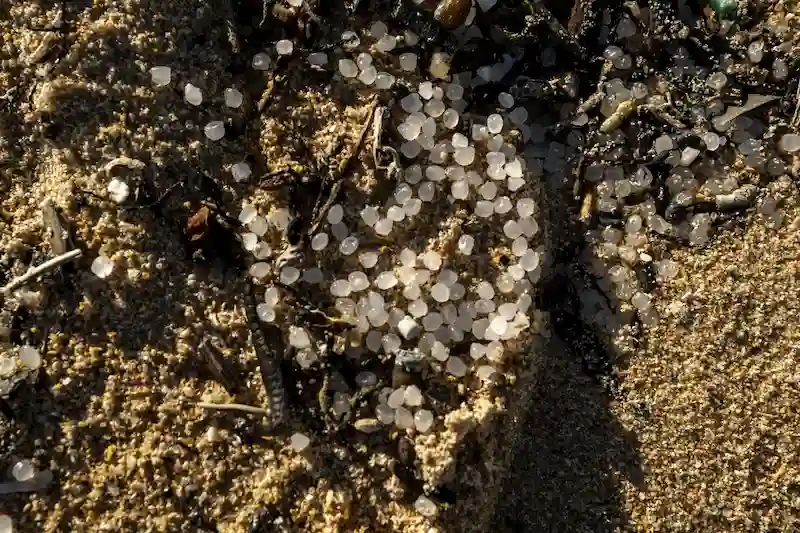


Millions of tiny white plastic pellets have been washing up on Spain's northwestern coast, resulting in a major cleanup effort by hundreds of volunteers. The pellets, measuring about 5 millimeters each, were lost from a tanker ship that had six containers go overboard off the coast of Portugal on December 8. One of the containers carried over 26 tons of PET pellets, which are used in the manufacturing of plastic products.
The spill may seem relatively small on a global scale, but it highlights the difficulties in dealing with microplastic pollution. According to non-profit organizations partially funded by the European Commission, around 167,000 metric tons of plastic pellets enter the EU's seas and land each year. While the plastic itself may not be toxic, the tiny particles have the capacity to absorb harmful chemicals and easily enter the food chain, from fish to bottled water.
The first pellets started appearing on Galician beaches in northwest Spain on December 13, prompting local councils, fishermen, and volunteers to initiate cleanup efforts. However, as the sacks containing the pellets began to deteriorate or break against the rocky cliffs, millions of pellets were released into the currents and onto the beaches.
The International Maritime Organization recommends that shipping containers holding plastic pellets be kept inside a vessel's hull or in a protected area on deck. The cause of the container loss is still under investigation, according to Maersk S/A, the company that owns the containers. The vessel, carrying the Liberian flag, has appointed cleanup specialists to assist with removing the pellets.
The sacks that washed ashore were labeled as being from Bedeko Europe, a plastics producer based in Poland. The company has not responded to requests for comment regarding the incident.
Galicia's coast has experienced environmental disasters in the past, such as the 2002 sinking of the Prestige oil tanker, which released 77,000 tons of fuel into the sea. This incident prompted Spain and European institutions to improve protocols for dealing with toxic spills and strengthen shipping regulations for oil tankers. However, the current pellet spill has exposed gaps in implementing these protocols.
The response to the spill has also been complicated by upcoming regional elections in Galicia, which have led to politicization of the situation. The conservative regional government has blamed the central government for not providing relevant information about the spill until January 3. However, reports suggest that the regional government was aware of the incident as early as December 21 but failed to activate cleaning protocols until January.
Environmental organizations, local fishermen, and concerned citizens have taken matters into their own hands by developing an online tool to report pellet sightings, organizing cleanup shifts, and providing necessary protective equipment. As the pellets continue to spread, volunteers tirelessly pick them up using various makeshift tools, including brooms, containers, and their own hands.
The true impact of this spill is yet to be determined, but the difficulties faced in cleaning it up underline the global scale of the problem. Containers full of plastic pellets are being lost regularly, and there is still limited knowledge on how to effectively address such incidents. As authorities struggle to coordinate their efforts, it is the collective determination and dedication of individuals and organizations on the ground that are making a difference in combating this environmental catastrophe.