




Thailand is poised to witness a significant surge in electric vehicle (EV) sales this year, with estimates suggesting that registrations could double, driven by the introduction of locally manufactured models by Chinese automakers and generous government incentives totaling $2.4 billion. Krisda Utamote, President of the Electric Vehicle Association of Thailand, predicts that new battery EV registrations could surpass 150,000 by the end of the year, elevating their share of total passenger car registrations to 20%, up from last year's 12% and the single-digit figures of 2022.
The wave of demand for EVs in Thailand can be attributed to the government's decision to reduce import and excise taxes, as well as provide cash subsidies to buyers, in exchange for commitments from automakers to start local manufacturing. These measures aim to establish Thailand as a regional auto hub while aligning with the country's target of achieving carbon neutrality by 2050. Major Chinese car manufacturers such as BYD Co. and Great Wall Motor Co. are among those setting up local production plants, which not only enhances Thailand's manufacturing capabilities but also aids in meeting its EV adoption targets.
Krisda highlighted that this year will witness the first wave of domestic rollouts by manufacturers who participated in the previous incentive program and committed to local production, resulting in an acceleration of domestic purchases.
Furthermore, the Electric Vehicle Association of Thailand estimates that annual EV registrations could potentially reach 225,000 units by 2025, in line with the National EV Policy Committee's target of achieving a 30% share of new-energy vehicles in total passenger car usage by that year.
While Thailand's auto industry is experiencing rapid expansion, it faces a potential challenge when it comes to the availability of public charging stations. Kasikornbank Pcl's research center cautioned in a report that the number of charging stations may not keep pace with EV sales, potentially impacting the appeal of these cars to mass-market buyers. However, Krisda remains optimistic, asserting that Thailand's infrastructure is adequately equipped to support the growing EV market, with more than 8,700 public chargers available at around 2,200 locations nationwide.
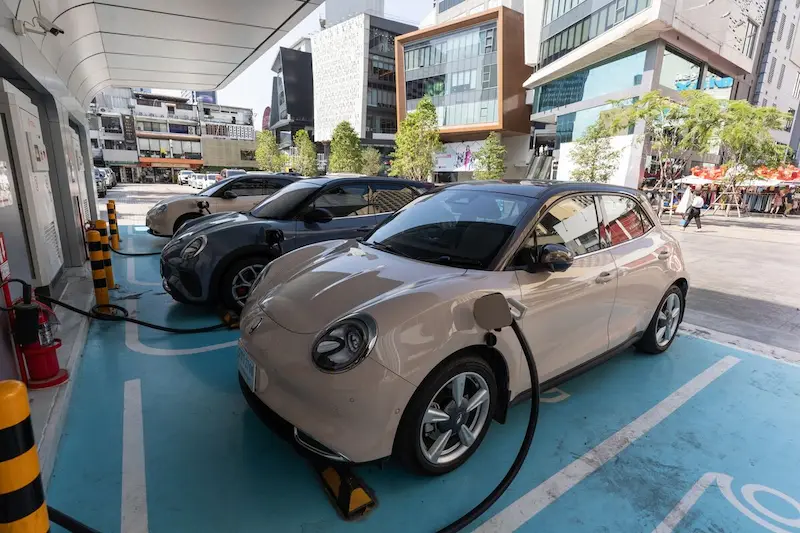
Despite the recent reduction of certain incentives in Thailand's latest package, foreign carmakers, particularly those from China, are leading the movement towards local production by 2024. Last year, Chinese-owned brands dominated the Thai market, occupying all but one of the top five spots for best-selling EVs, with Tesla trailing in fourth place according to government data. Great Wall Motor recently launched a local production line for the Ora Good Cat, Thailand's first commercially manufactured and sold battery-powered EV. This milestone is anticipated to be followed by more Chinese EV makers like BYD and Hozon New Energy Automobile Co., both expected to commence local manufacturing this year.
Despite the changes to incentives, Thailand still presents long-term opportunities for foreign automakers. Krisda asserts that the growing demand within the country creates a competitive environment for investment, with no signs of any industry players backing down, as they do not want to miss out on the EV revolution.