


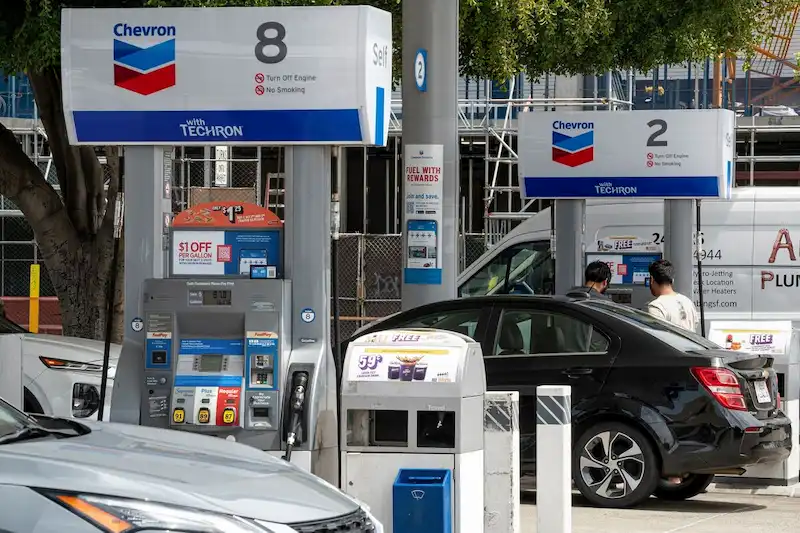


Chevron Corp. has issued a warning to its home state of California, expressing concerns that the state's climate policies could lead to gasoline price spikes and shortages. Andy Walz, who heads the oil giant's US refining division, explained in an interview that if state legislators continue enacting policies to discourage petroleum production, the premium California drivers pay for gasoline over the national average is likely to rise significantly. Despite having the highest penetration of electric vehicles, California remains the second-largest consumer of gasoline in the United States.
In the final quarter of 2023, California drivers paid an average of $4.94 per gallon of gasoline, which is roughly $1.72 above the national average and marked the highest quarterly premium on record, according to Bloomberg data. The state currently has strict low-carbon fuel standards in place, which are encouraging refineries to switch from petroleum to renewable diesel. While such conversions reduce gasoline supply and push up prices, Walz argues that this was anticipated when the legislation was written, and now consumers are starting to feel the pain. However, instead of taking responsibility, politicians are deflecting blame onto oil companies.
Responding to Chevron's warning, California Governor Gavin Newsom's office released a statement accusing Big Oil of price gouging and lying to protect their profits. The relationship between Chevron and its home state has become increasingly hostile as regulations tighten, squeezing profits and resulting in a $4 billion write-down of the company's assets, primarily in California. Newsom has initiated investigations and lawsuits over allegations of price gouging and climate change denial. Chevron vehemently denies these allegations and argues that it should not be penalized for meeting consumer demand for transportation fuels that still heavily rely on fossil fuels.
The latest point of contention stems from a proposed maximum refining margin in California. Chevron already struggles to justify growth projects at its two refineries in the state due to the plan to ban internal combustion engine sales by 2035. However, if a law is enacted that effectively caps refinery profit, these projects would become almost impossible. Walz states that such a move would discourage large capital investments, making it preferable to allocate funds to Chevron's refinery in Mississippi.
For decades, California has influenced national policy, particularly in the environmental sector. The state's stringent tailpipe emission regulations set in the 1970s surpassed federal standards but quickly became the national norm, as it was easier for automakers to comply with the toughest regulations from the largest market. This phenomenon, known as the "California Effect," extended to various industries, including consumer goods and data privacy.
Governor Newsom has set an ambitious goal for California to achieve net-zero emissions by 2045, five years ahead of the entire US. The state, already experiencing the devastating impacts of climate change through frequent droughts and wildfires, currently sources over 50% of its power from non-CO2 emitting sources, compared to 30% a decade ago. California also accounts for more than a third of the country's electric vehicle sales. However, this success contributes to the high gasoline prices in the state. Refining companies, seeking to benefit from state incentives, have been converting their facilities to produce renewable fuels, resulting in an 11% reduction in California's refining capacity over the past decade.
According to Walz, these conversions and alterations to the state's product mix pose a risk to reliability. The abundance of renewable diesel and shortage of gasoline in the state becomes more challenging due to California's lack of pipelines connecting it with the rest of the country. Walz warns of a potentially dangerous scenario in which resupplying gasoline to California would need to come from Europe or Asia, which would take significant time.
While California's commitment to addressing climate change is commendable, Chevron's warning highlights the potential consequences of aggressive policies that discourage petroleum production. Balancing the need for environmental sustainability with maintaining a reliable and affordable energy supply will continue to be a complex challenge for the state.