


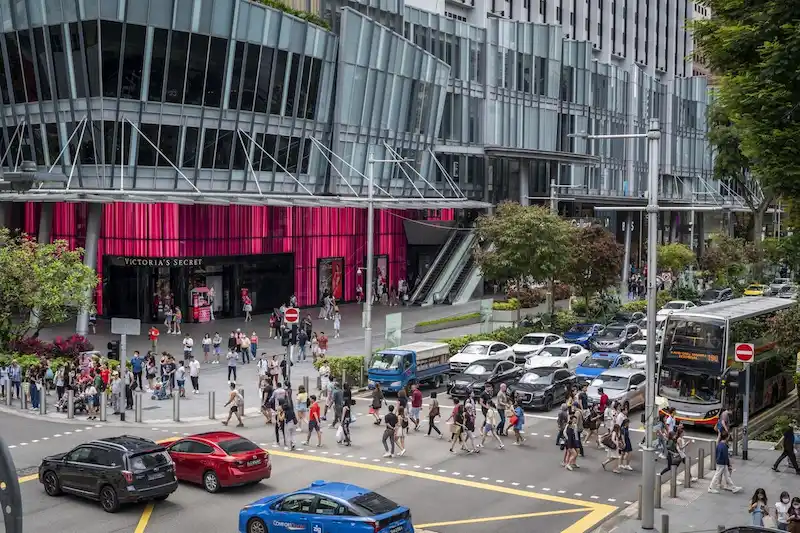


Singapore, known for its high living costs, is facing a growing debate around the elevated prices of vehicles and the widening income gap. The city-state's vehicle ownership cost is already considered a global outlier, and it continues to hover near a record high. The Singaporean government's zero-growth approach to registering new cars clashes with the increasing demand from the country's affluent population.
A major factor contributing to the high cost of vehicle ownership in Singapore is the Certificate of Entitlement (COE). The COE is a permit required to own and use a car in Singapore for ten years. The price of the COE is determined through an auction every two weeks, and in the past three years, it has almost quadrupled to reach a staggering S$150,000 ($111,800) in October 2022 for cars with engines larger than 1.6 liters.
While COE prices have recently cooled off due to an increase in the number of permits being made available, they remain susceptible to sudden spikes. Just before the Lunar New Year, COE prices surged by 32% to S$112,000 ($83,500) for larger cars. This volatile pricing has added to the concerns surrounding inflated rents, increasing inflation, and the influx of wealthy foreigners into Singapore in recent years.
Victor Kwan, a senior lecturer at Singapore University of Social Sciences, asserts that COE prices highlight the wealth gap in Singapore. If the prices continue to rise, it could lead to growing frustration among the population. Singapore currently holds the title of the world's most expensive place to own popular cars, according to cost-of-living data from Numbeo.
The Singaporean government has tightly controlled vehicle numbers since 1990 and adopted a zero-growth policy for the vehicle population in 2018. Owning a car is not considered essential for most people in Singapore due to the city-state's excellent public transportation system. Consequently, the proportion of car-owning households has decreased from 40% in 2013 to around one-third in recent years. However, owning a car is still seen as a symbol of wealth that many aspire to attain.
While the net worth per adult in Singapore rose by 6.3% in 2022, creating more than 300,000 US dollar millionaires, COE prices for small cars more than doubled between 2018 and 2023, while median monthly income only increased by 2.4%. This means that an individual earning the median salary of S$5,197 per month would have to spend almost three years' wages to afford a Toyota sedan.
In an attempt to cool the market, the government committed to bringing forward 6,000 COE permits in May, but this failed to bring down prices significantly. The Minister of Transport pledged in November to further increase the quota of permits to address the limited supply. However, the Singaporean Ministry of Transport declined to comment on the recent spike in COE prices and the issue of affordability.
Despite the exorbitant prices, many Singaporeans still view owning a car as essential to their lifestyle. At the Singapore Motorshow, individuals like Abu Bakar bin Isnin, 64, expressed their intention to purchase a new vehicle, despite the new COE permit costing nearly double the price of their expiring one. For Abu Bakar, a car is not seen as a luxury but a necessity, as he plans to use it to drive his grandchildren around after retiring from his managerial job, highlighting the importance of family in Singaporean culture.