


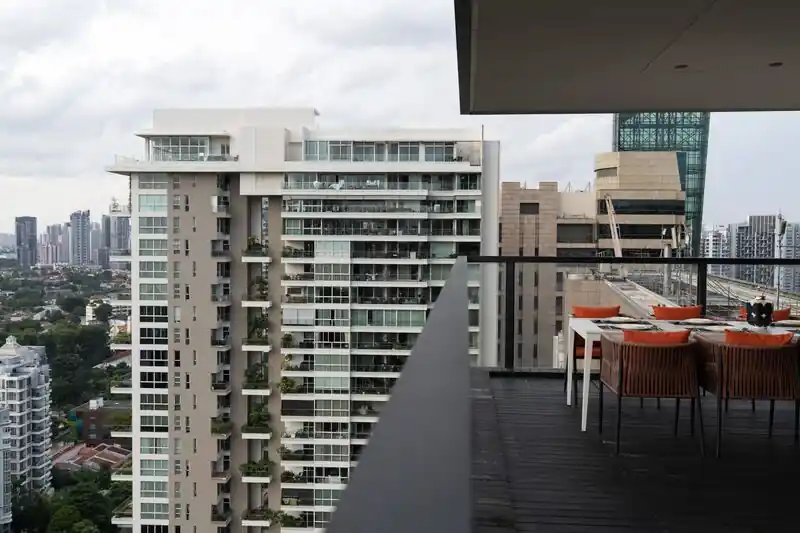


Singapore has announced new measures aimed at curbing surging money inflows from wealthy Chinese buyers by doubling property taxes for foreigners. Under the new policy, foreigners will pay a 60% tax on any residential purchase, while the rate for using an entity or a trust was raised to 65%, preventing any circumvention of the rules. Permanent residents and citizens buying their second residential property will also pay more. The additional buyer’s stamp duty, or ABSD, comes on top of a multi-tiered existing tax that all homebuyers pay.
The move comes after many ultra-wealthy Chinese buyers moved to the city in recent years due to strict pandemic restrictions. Family office assets at Singapore’s banks are on the rise, and costs for everything from apartments to luxury cars and golf memberships are soaring, raising concerns about a widening wealth gap.
The timing of the announcement also comes ahead of a general election due by 2025. With housing a hot issue, authorities raised taxes for buyers of higher-value properties in the latest budget. In March, Singapore increased the threshold for global investors seeking permanent-resident status in an attempt to create more jobs and benefit locals.
Despite global slowdowns in property markets, Singapore's home prices are defying the trend, rising for a 12th straight quarter in Q1 2021, according to official data. Bloomberg Intelligence predicts prices could rise as much as 5% in 2023 after gaining 3.2% in the first quarter. However, the new rules are unlikely to affect the mass market, as foreigners only accounted for 4.4% of private home sales in Singapore last year, according to PropNex Realty and official data. The policy changes will affect about 10% of residential property transactions, according to the government statement.
For the rental market, demand could rise as foreign buyers choose to rent while waiting for permanent residency or citizenship, according to research by property agency Huttons Group. Singaporeans could also choose to rent in the time period between selling their first property and buying another unit, the firm said.
National Development Minister Desmond Lee said that the rules are aimed as an early measure to dampen investment demand. The government wants to ensure that the 10% foreign buyer figure doesn’t rise significantly, he added. Instead of the mass market, properties in the S$6 million ($4.5 million) and higher categories will likely be hit harder, said Oversea-Chinese Banking Corp. Investment Research Head Carmen Lee.
Singapore's government doesn’t disclose the origins of wealth inflows, but Chinese have been the largest foreign buyer group since 2016 and made up 6.9% of foreign purchases of private apartments last year. The property consultancy potentially sees a more than 10% increase in the number of homes purchased by Chinese this year, in tandem with rising supply.
According to Christine Sun, OrangeTee’s senior vice president of research and analytics, the new measures could be seen as more "preemptive" than immediate in order to slow down purchases from foreign buyers, especially from China. She believes that the more Singapore stands out during crises, the more people want to come to Singapore. However, the country's authorities need to balance this with the need to ensure that the average person can still afford a house to live in.