


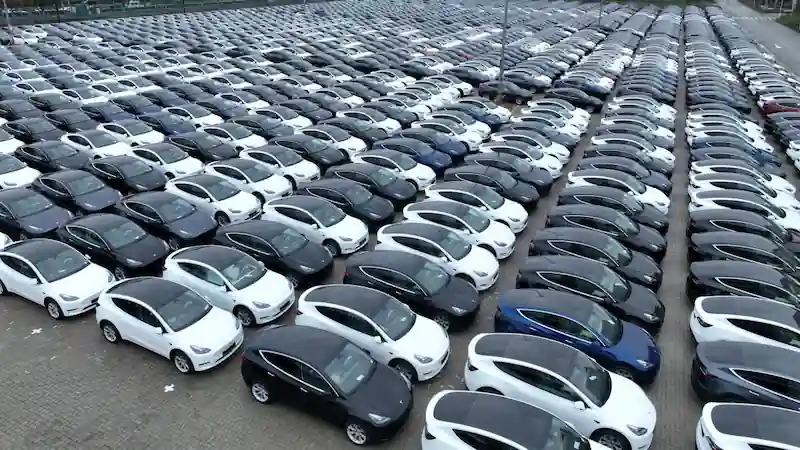


Tesla, the American electric car manufacturer, has raised the prices of its Model Y SUV and Model 3 sedan in its key markets, including China and the United States. The move comes after a series of price cuts in recent months, which pushed the company's profit margin to its lowest since 2020, sparking a price war among competitors.
In China, Tesla has increased the prices of its popular models by 2,000 yuan ($289), with the Model Y and Model 3 now starting at 263,900 yuan ($38,179) and 231,900 yuan ($33,550) respectively. However, despite the increases, the models are still cheaper than they were at the beginning of the year, thanks to several rounds of reductions.
Tesla has also raised the prices of the Model Y and Model 3 by around $222 in Canada and $269 in Japan respectively. In the US, the same models saw a price hike, with the Model Y starting at $47,240 and the Model 3 at $40,240. However, the $250 increase was less than China's.
This is the second time in recent weeks that Tesla has raised prices on its vehicles. Last month, the company raised the prices of its higher-end vehicles, the Model S and Model X, by $2,500 in the US. However, these vehicles only accounted for a small portion of Tesla's total sales, 2.5%, in the first quarter.
The recent round of price adjustments has reversed a series of significant price cuts that Tesla had implemented to boost demand. Last month, CEO Elon Musk confirmed the company's pricing strategy at an earnings call, hinting at further price cuts to boost sales volumes. However, analysts suggest that the recent price increases have the same purpose of stoking consumer demand.
Citi analysts suggest that Tesla may be trying to "reverse customer expectation for further price cuts" to prevent customers from adopting a wait-and-see strategy. The company may also want to "test demand elasticity given repeated price cuts could lead to weakened effectiveness in boosting sales volume."
Until recently, Tesla had cut prices aggressively to bolster demand amid growing competition from other EV makers. The company had reduced prices six times this year in the United States before the recent increases. In China, the world's largest EV market, Tesla had conducted several rounds of price reductions between October and January after it lost market share to competitors such as Warren Buffett-backed BYD.
According to the China Passenger Car Association, Tesla's sales of its China-made vehicles surged 35% in March to over 88,000 units. However, the company still lags behind BYD, which sold over 100,000 pure battery EVs.
While the price cuts have boosted Tesla's sales, they have also cut into its net income and profit margins. In the first quarter of 2021, the company's revenue rose by 24%, but its gross profit margin dropped to 19.3%, the lowest since the end of 2020. Its net income also fell by 24% compared to the same period last year.