


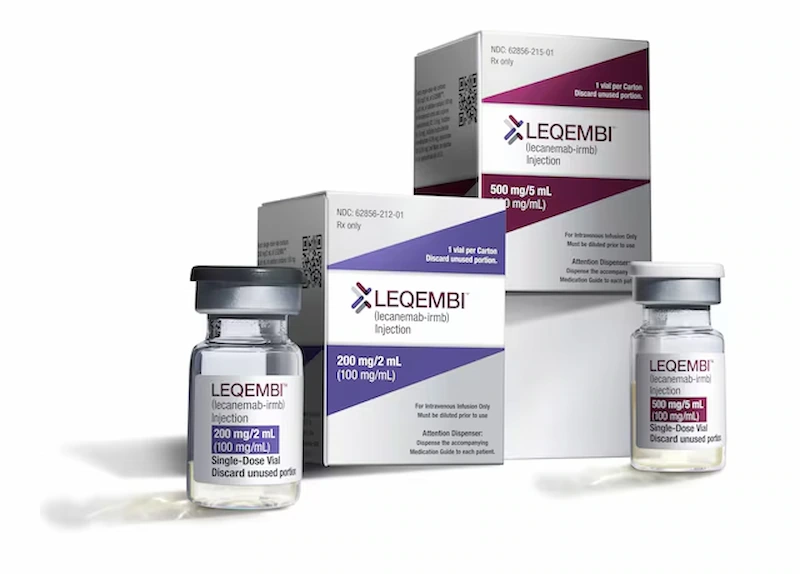


The European Union's drugs regulator has given its recommendation for the approval of Eisai and Biogen's Leqembi as a treatment for some patients with early Alzheimer's disease. This decision comes after a reversal of the initial rejection made four months ago. The approval, if accepted by the European Commission, would mark the EU's first treatment for this debilitating condition.
The regulator's human medicines committee (CHMP) advised approval for a more limited group of patients compared to those originally assessed in Leqembi's trial. The drug had been tested in patients with one or no copy of the ApoE4 gene variant, which is associated with an earlier onset of Alzheimer's. The revisited evaluation focused on the benefits of Leqembi in slowing down disease progression versus the risks it poses in patients without the gene variant.
The EU regulator highlighted that patients with one or no copy of the ApoE4 gene were less likely to experience severe side effects such as brain swelling and potential bleeding observed in the trials. The CHMP's recommendation also considered real-world implications, estimating that this group accounted for a significant portion of patients in the Phase 3 study.
While the approval could pave the way for Leqembi to become a crucial treatment option in Europe, challenges related to launch strategies remain. The drug necessitates additional diagnostic tests and regular brain scans, adding complexity to its implementation. However, this recommendation may aid in justifying pricing and reimbursement decisions for the drug in individual EU member states post-authorization, potentially influencing up to 30% of the drug's global sales, according to analysts.