


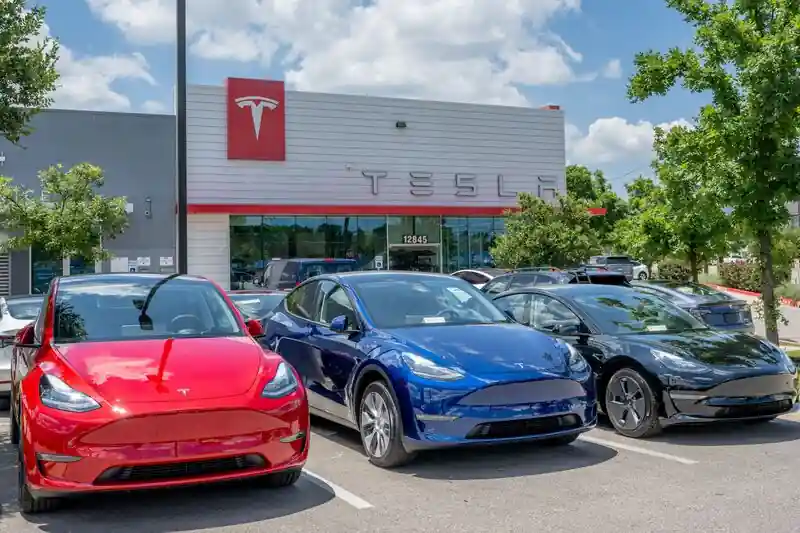


Tesla is set to receive a windfall of around $1.8 billion in production tax credits under President Biden's Inflation Reduction Act (IRA), according to forecasts by Benchmark Mineral Intelligence. This far exceeds other major automakers such as General Motors (GM), which is expected to receive $480 million, and Ford, which is not due to receive benefits from the law until 2025. The significant disparity reflects the structure of the IRA, which rewards scale and incentivises battery suppliers and automakers who produce in the US. As Tesla has already broken ground on a battery plant, it enjoys a significant benefit from these rewards.
These production credits, which cover operations across the EV supply chain, from mining and processing raw materials like lithium to manufacturing batteries in the US, will enable Tesla to capitalise on its first-mover advantage. Tesla is currently ahead of traditional automakers in producing products that are eligible for the incentives, with the company's battery plant near Reno, Nevada, set to be supplemented by both a battery plant in Austin and a lithium refinery in Corpus Christi. Conversely, GM and Ford are making significant domestic investments in order to produce batteries in the US, but it is expected to take several years for domestic production levels to compete with those of Tesla.
Tesla plans to utilise the credits to continue lowering prices, applying a strategy of sacrificing short-term profit margins to increase sales volumes against a backdrop of greater competition. This approach will place immense pressure on rival automakers to follow suit, adding to the profitability challenges that legacy manufacturers already face as they seek to electrify their lineups. Piper Sandler analyst Alexander Potter has estimated that Tesla's average selling price could fall $125 per unit each quarter for the next two years, without affecting margins, as a result of the production tax credits.
Despite this significant financial advantage, the situation poses an awkward political conundrum for Tesla CEO, Elon Musk, who has been critical of President Biden in the past. The IRA was one of Biden's signature achievements and was intended to decrease the cost of batteries to support electrification while spearheading the creation of a strong domestic supply chain.
While the EV tax credits for consumers received much of the attention in the immediate aftermath of the bill's passage, the production credits offer the true prize, particularly to Tesla, as the firm already dominates the market. The tax credits provide $45 per kilowatt-hour for batteries made in the US, equating to approximately $2,700 - $4,500 per vehicle. It remains difficult to state exactly how much each firm will receive in tax credits thus far, with Tesla expecting figures lower than those proposed by Benchmark Minerals.
However, the availability of the credits does encourage automakers to move quickly to establish their own battery plants so as to maximise their benefit from the scheme before the credit begins to phase out in 2030.