


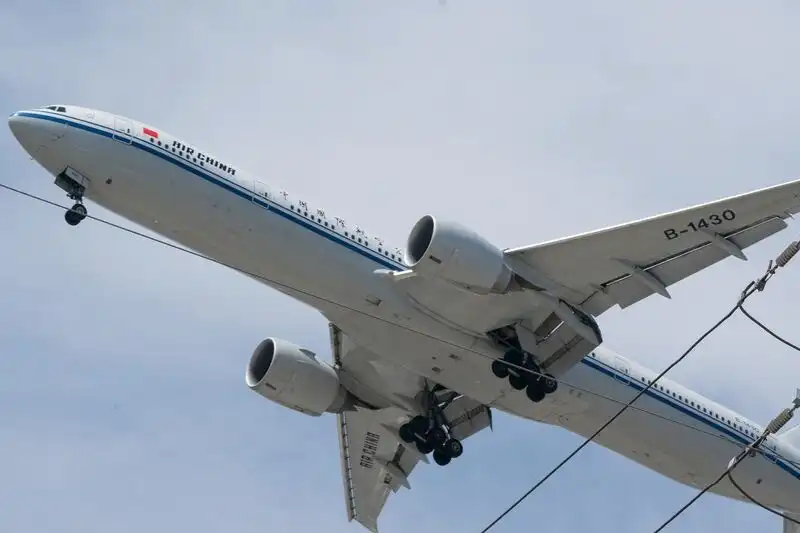


Boeing is seeing a resurgence in its fortunes in China as the country’s aviation industry rebounds from the pandemic, with citizens eager to travel again. The demand for new jetliners is high, and as a result, new aircraft are increasingly hard to come by. The Boeing 737 Max, the newest version of the plane, was grounded worldwide after two fatal crashes. Since then, the aircraft manufacturer struggled to get orders for the plane, particularly in China, where regulators ordered the airline to ground it indefinitely. However, with the aviation industry on the path to recovery, the fortunes of Boeing in China are improving.
In 2019, almost a third of the purchases of Boeing 737 jets were made by China's largest carriers, such as Air China, China Southern, and China Eastern. Airbus SE's assembly line in Tianjin, which opened in 2008, only served to increase Boeing's dominance as the leading supplier of aircraft to China. However, after the fatal crashes and growing trade tensions with the US, China began to turn to Airbus as a viable alternative. By July 2021, Airbus had signed a deal to supply 292 planes to China. Meanwhile, Boeing had to contend with orders earmarked for China worth $10 billion stuck in limbo.
However, China is easing its lockdown restrictions, and there is a rebound in travel, bringing traffic back to pre-Covid levels. Furthermore, China has allowed the Boeing 737 Max to return to the skies, and Boeing executives believe that within weeks, they could sell its jets to Chinese buyers once more. Despite the trade tensions and ongoing geopolitical differences between China and the US, Boeing's advantage is increasing as the country's airlines face a shortage of aircraft to carry its citizens. Ryanair Holdings Plc and United Airlines Holdings Inc. have already locked in orders for the Boeing 737 Max and Dreamliners for 2027 and beyond.
The scarcity of aircraft is also due to the supply chain's struggle to recover from the pandemic, still prevailing three years on. Airbus has had to reduce its delivery targets twice in 2022, resulting in fewer aircraft delivered than anticipated, exacerbating an already tight supply of new planes. Boeing expects the continued seller's market to last for the next five years or so as shortages of seats, engines, and parts will continue until the end of next year.
Boeing may have been at a disadvantage after the Max crisis, but it has a credible path to regain its market share in China, according to aviation consultant Richard Aboulafia. The Commercial Aircraft Corp. of China or COMAC, China's homegrown plane maker, is not yet a real challenger to Boeing, particularly until China's answer to the Max, the C919, can prove its reliability flying heavy daily workloads. Meanwhile, Chinese carriers have already taken two-thirds of their 97 Max planes out of storage since January to meet the rising demand for air travel.
In summary, the aviation industry's recovery and a scarcity of new planes have shifted the balance of power once more in Boeing's favor. China must jostle for delivery slots, and Boeing is increasingly confident that its jets could soon be winging their way to Chinese buyers. While sales to China continue to be of utmost importance, Boeing has also set out plans to stabilize its financial situation by mid-decade, despite the trade impasse with China. With the continued demand for new planes, Boeing needs to kick-start sales to China if it wants to increase deliveries of the 737 and 787 to meet demand in China's aviation industry.