


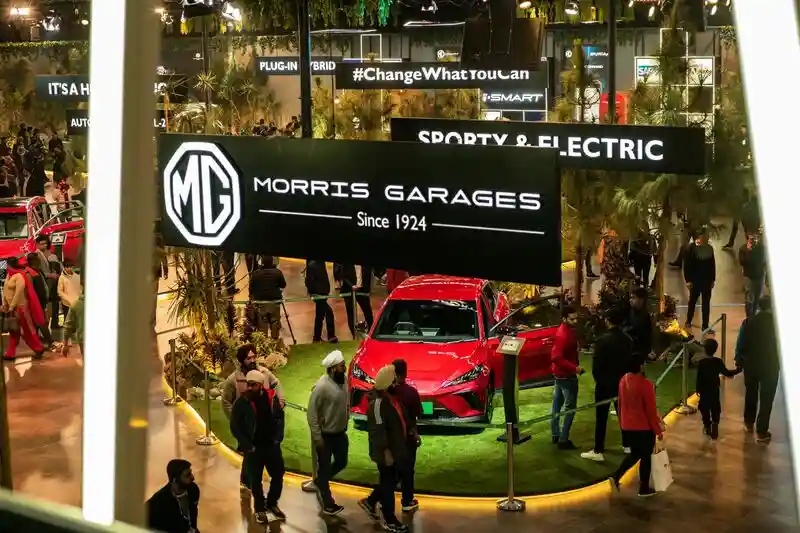


Over the years, India has been a challenging market for foreign car makers to break into due to high taxes, cost-conscious consumers, and logistical challenges. Local companies like Maruti Suzuki have dominated the market, and even established foreign automakers have struggled. However, the introduction of electric vehicles has given these companies a second chance.
One example is MG Motor India, the Indian unit of China's SAIC Motor, which recently announced plans to build four to five new models of electric cars and to derive up to three-quarters of its sales in India from electric cars by 2028. MG Motor is investing $607 million to construct a second factory for EV production and battery assembly in Gujarat.
Hyundai is also investing $2.7 billion to create an electric vehicle ecosystem in Tamil Nadu. The company will establish a battery pack assembly with an annual capacity of 178,000 units and install 100 charging stations along major highways.
This shift towards electric vehicles may help to galvanize India's slow EV adoption. Electric vehicle sales accounted for only 1.3% of the 3.8 million passenger vehicles sold in India in 2020, due in part to the higher cost of EVs compared to internal combustion engine cars and the limited availability of charging infrastructure. However, with the growing interest of global automakers and India's Prime Minister Narendra Modi's efforts to attract companies with cash incentives, the industry's prospects are improving.
For example, Volkswagen is reportedly planning to electrify 30% of its passenger vehicle lineup in India by the end of the decade and may launch its first electric car, the ID.4, there in 2022. Tesla, despite a long standoff, is showing signs of interest in the Indian market, with senior executives visiting the country last month to discuss the possibility of local sourcing of components and incentives.
Renault and Nissan are also planning to invest around $600 million in India to expand their electric vehicle lineup alongside the decarbonization of one of their manufacturing plants.
Although the path forward may not be easy, the dearth of EV adoption in the local market provides an opportunity for foreign automakers to gain a foothold and participate in India's growing automotive industry.