


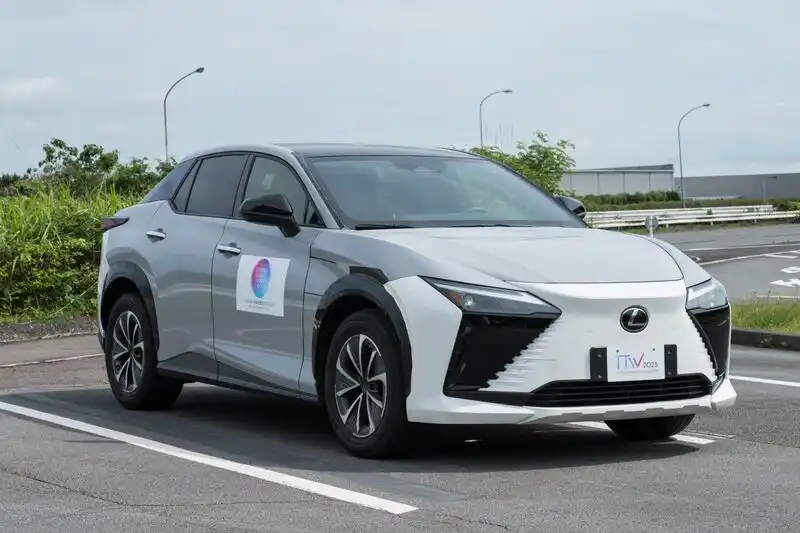


Toyota's technology executives are feeling more confident about the company's ability to produce and sell millions of electric vehicles. The world's biggest automaker's Chief Technology Officer, Hiroki Nakajima, spoke during a day-long set of technology briefings last week at Toyota's research facility near Mount Fuji. He revealed that the automaker is confident in achieving its goal of selling 1.5 million battery-electric vehicles by 2026 as consumers make the transition from hybrids to fully electric cars.
For years, Toyota executives have spoken cautiously about the speed at which customers will be ready to go all-electric. The company, which pioneered electric vehicles with the hybrid Prius, is now trying to catch up to rivals like Tesla and BYD in selling battery-powered cars. Although the company is still optimistic about the potential of hydrogen and carbon-neutral fuels, new CEO Koji Sato has pushed for an EV-first approach.
During the technology briefings, Toyota's engineers and product managers showcased their research and product plans, including test drives of new vehicles and prototypes. They demonstrated innovations ranging from longer-range batteries to slicker aerodynamics and more efficient production processes. Takero Kato, who leads Toyota's battery EV efforts, said that buyers should expect a quicker pace of product releases in the coming months and years.
Toyota has set ambitious objectives of introducing ten new EV models by 2026 and selling 1.5 million battery-electric vehicles annually. That will be an interim step towards reaching 3.5 million by 2030, a goal set by Sato's predecessor Akio Toyoda, who is now the company's chairman. During his tenure, the Prius helped Toyota to overtake Volkswagen as the world's largest automaker.
Toyota plans to roll out at least two new types of batteries within the next few years. One will launch in 2026 with a range of 621 miles, cutting costs by 20%, and adding improvements in weight reduction and airflow design. The other battery, a lithium iron phosphate battery, is slated for 2026 or 2027 and aims to reduce costs by 40% compared to the battery in the bZ4X while increasing range by 20%. In 2027 or 2028, Toyota plans to start producing vehicles with high-nickel cathodes that offer even greater range and cost improvements.
Toyota also demonstrated new ideas for vehicle manufacturing aimed at halving development costs and plant investment. The company is embracing three-part body architectures that will allow for greater interchangeability between front and rear structures and batteries. Toyota also showcased a radical idea for its production system, which entails building EV powertrains on wheels that can drive autonomously from one workstation to the next.
Koji Endo, managing director of SBI Securities, who attended last week's briefings, commented that Toyota's executive team was convincing. "Many doubted whether they can boost output by 500,000 units a year," Endo said. "But after going to the research center, most analysts now think they can."